


.jpg)


1. Introduction
Australia's bus and transport industry plays a vital role in connecting cities, suburbs, and regional communities. As urban populations grow and commuter expectations evolve, traditional ticketing and fleet management systems are no longer sufficient, driving demand for modern digital transport solutions.
Today, passengers expect seamless mobile bookings, real-time bus tracking, secure digital payments, and instant notifications from a modern bus booking app. At the same time, transport operators need efficient tools to manage routes, fleets, drivers, schedules, and revenue—making fleet management platforms essential for operational success.
As a result, startups and transport operators across Australia are increasingly investing in custom bus ticket booking and fleet management applications. Unlike off-the-shelf software, custom solutions provide greater flexibility to tailor pricing models, optimize routes, improve passenger experiences, and meet Australian compliance requirements.
FlutterFlow has emerged as a powerful low-code platform for building these next-generation transport applications. With support for Android, iOS, and web development, along with real-time data handling and backend integrations, FlutterFlow enables teams to build scalable, high-performance bus booking and fleet management solutions faster and more cost-effectively than traditional development approaches.
2. Why FlutterFlow Is the Best Choice for Bus Ticket Booking & Fleet Management Apps
FlutterFlow is an ideal platform for building both passenger-facing mobile applications and operator or admin dashboards required for Bus Ticket Booking & Fleet Management App Development in Australia. It allows developers to create intuitive user experiences for passengers while simultaneously supporting complex operational workflows such as route management, fleet monitoring, driver allocation, payments, and analytics—key components of effective Fleet management app development.
With support for mobile and web platforms from a single codebase, FlutterFlow enables businesses to build a scalable Bus booking app in Australia that ensures consistency, scalability, and performance across all user touchpoints. This unified approach makes FlutterFlow a strong choice for delivering a high-performing FlutterFlow transport app tailored to modern transport and mobility requirements.
2.1 Reasons to Prefer FlutterFlow for Bus Booking App Development
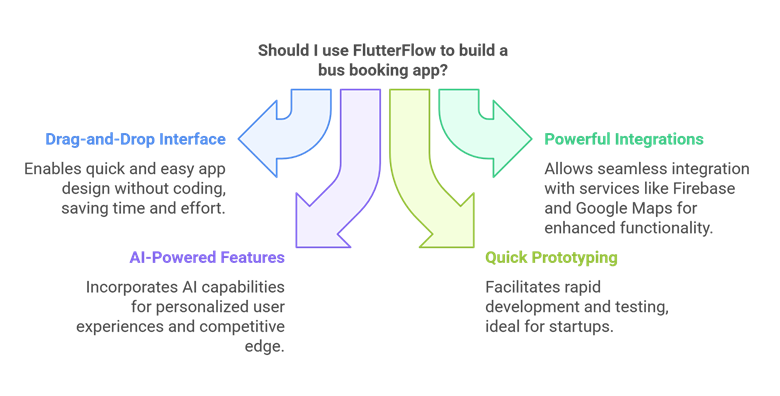
1. Drag-and-Drop Visual Development
FlutterFlow provides a visual drag-and-drop development environment that significantly accelerates UI creation for Bus Ticket Booking & Fleet Management App Development in Australia. Passenger interfaces such as search, booking, seat selection, and payment screens can be built quickly without extensive manual coding. This visual approach also makes it easier to iterate and refine the application, allowing teams to adapt quickly, whether they are building an MVP or scaling an enterprise-level Bus booking app in Australia.
2. Powerful Integrations & APIs
A reliable bus booking and fleet management app depends on a strong backend and third-party integrations. FlutterFlow seamlessly integrates with backend services like Firebase, Supabase, and Xano to handle authentication, databases, and business logic, which are critical for modern Fleet management app development. It also supports integrations with Google Maps for route planning and live tracking, payment gateways for secure transactions, and SMS or email services for booking confirmations and real-time notifications in a FlutterFlow transport app.
3. BuildShip Integration for AI-Powered Features
Through its integration with BuildShip, FlutterFlow enables the implementation of AI-powered features that enhance operational efficiency and user experience for Bus Ticket Booking & Fleet Management App Development in Australia. These capabilities can be used for demand prediction based on historical booking data, route optimization to improve punctuality and reduce costs, and smart pricing models driven by real-time demand and occupancy levels. AI-based analytics also help operators gain deeper insights into performance and revenue trends for scalable Fleet management app development.
4. Rapid Prototyping & Reduced Development Time
FlutterFlow allows teams to prototype, develop, and launch applications much faster than traditional native development approaches. Supporting cross-platform deployment from a single codebase, it reduces both development time and overall costs. This faster go-to-market enables transport businesses and startups to validate ideas quickly, scale efficiently, and continuously improve their Bus booking app in Australia as a high-performance FlutterFlow transport app.
3. Core Features of a Bus Ticket Booking & Fleet Management App
A successful bus ticket booking and fleet management application must deliver a seamless experience for passengers while ensuring reliability, transparency, and ease of use as part of Bus Ticket Booking & Fleet Management App Development in Australia. The passenger-facing app plays a crucial role in customer satisfaction, as it directly impacts booking convenience, trust, and repeat usage. Below are the essential user-facing features that form the foundation of a modern Bus booking app in Australia.
3.1 User (Passenger) App Functionalities
1. User Registration and Login
A secure and flexible authentication system is the first point of interaction for passengers. The app should support traditional email and password login for standard users, along with social login options such as Google and Apple to reduce friction during onboarding. OTP-based login is particularly important for mobile users in Australia, as it enables quick and secure access without the need to remember passwords, improving overall user adoption and retention in a FlutterFlow transport app.
2. Search and Filter Options
Efficient search and filtering capabilities are essential for helping passengers find the most suitable travel options. The app should allow users to search buses based on source, destination, travel date, and preferred departure time. Advanced filtering options, such as price range, bus type, available amenities, and seat availability, enable passengers to compare options easily and make informed booking decisions, enhancing the overall user experience of a scalable Bus booking app in Australia.
3. Booking Management
Booking management is at the core of the passenger experience. The application should provide interactive seat selection, allowing users to choose their preferred seats visually. Dynamic fare calculation ensures that prices are updated in real time based on seat availability, route, and demand. In addition, passengers should be able to view their booking history, manage upcoming trips, and initiate cancellations directly from the app, making the entire process transparent and user-friendly while supporting robust Fleet management app development.
4. Real-Time Notifications
Real-time communication keeps passengers informed and builds trust. The app should send instant booking confirmations once a reservation is completed, along with timely alerts for cancellations or schedule changes. Trip reminders and boarding notifications help passengers stay on track, reducing missed journeys and improving overall travel reliability within Bus Ticket Booking & Fleet Management App Development in Australia.
5. Payment Gateway Integration
Secure and seamless payment processing is a critical requirement for any ticket booking platform. The app should support trusted payment gateways such as Stripe, Razorpay, and PayPal, which are widely used and compliant with Australian payment standards. Features such as multiple payment methods, secure transactions, and automated refund handling for cancellations contribute to a smooth and reliable payment experience for passengers using a modern FlutterFlow transport app.
6. Live Bus Tracking
Live bus tracking significantly enhances passenger confidence and convenience. By integrating GPS-based tracking, the app can display real-time bus locations and provide accurate Estimated Time of Arrival (ETA) updates. Route visualization on interactive maps allows passengers to monitor the journey progress, plan their arrival at boarding points, and stay informed throughout the trip—an essential capability for advanced Fleet management app development.
7. Ratings and Reviews
Ratings and reviews play a vital role in improving service quality and building credibility. The app should allow passengers to rate their journey and submit reviews for trips and drivers. This feedback helps operators identify areas for improvement, maintain service standards, and build trust with future passengers by showcasing transparent and authentic user experiences in a Bus booking app in Australia.
3.2 Fleet Management & Operator Features
While passenger-facing features drive adoption, the true strength of a bus ticket booking platform lies in its fleet and operator management capabilities as part of Bus Ticket Booking & Fleet Management App Development in Australia. These features enable transport companies to manage daily operations efficiently, reduce manual effort, and maintain full visibility over fleets, routes, drivers, and revenues. A well-designed operating system ensures scalability, reliability, and long-term operational success through advanced Fleet management app development.
1. Fleet & Vehicle Management
Fleet and vehicle management is the foundation of any transport operations platform. The system should allow operators to register buses, assign unique identifiers, and track their real-time operational status. Availability management ensures that only active and serviceable vehicles are assigned to routes, reducing disruptions. Maintenance scheduling plays a critical role in ensuring passenger safety and minimizing downtime by allowing operators to plan servicing, inspections, and repairs proactively within a scalable FlutterFlow transport app.
2. Driver Management
Effective driver management ensures smooth execution of daily trips and consistent service quality. The platform should support driver onboarding, including profile creation, document verification, and role-based access. Operators must be able to assign drivers to specific routes or trips while tracking attendance and availability. Performance tracking, based on punctuality, trip completion, and passenger feedback, helps improve accountability and maintain high service standards for a modern Bus booking app in Australia.
3. Route & Schedule Management
Route and schedule management enables operators to design and optimize their transport network efficiently. The system should allow the creation and modification of routes with defined stops and travel times. Timetable and frequency planning help operators manage peak and off-peak schedules effectively, ensuring optimal resource utilization. Peak-hour optimization is especially important in urban Australian markets, where demand fluctuates throughout the day and requires dynamic planning as part of Bus Ticket Booking & Fleet Management App Development in Australia.
4. Admin Dashboard
The admin dashboard acts as the central control hub for the entire bus booking and fleet management system. It should provide a real-time overview of ongoing trips, active buses, driver assignments, and passenger bookings. Access control features ensure that different user roles, such as operators, managers, and support staff, have appropriate permissions. Revenue and performance analytics, along with downloadable reports, enable data-driven decision-making and help businesses track growth, profitability, and operational efficiency through robust Fleet management app development.
4. How to Build a Bus Ticket Booking App Using FlutterFlow
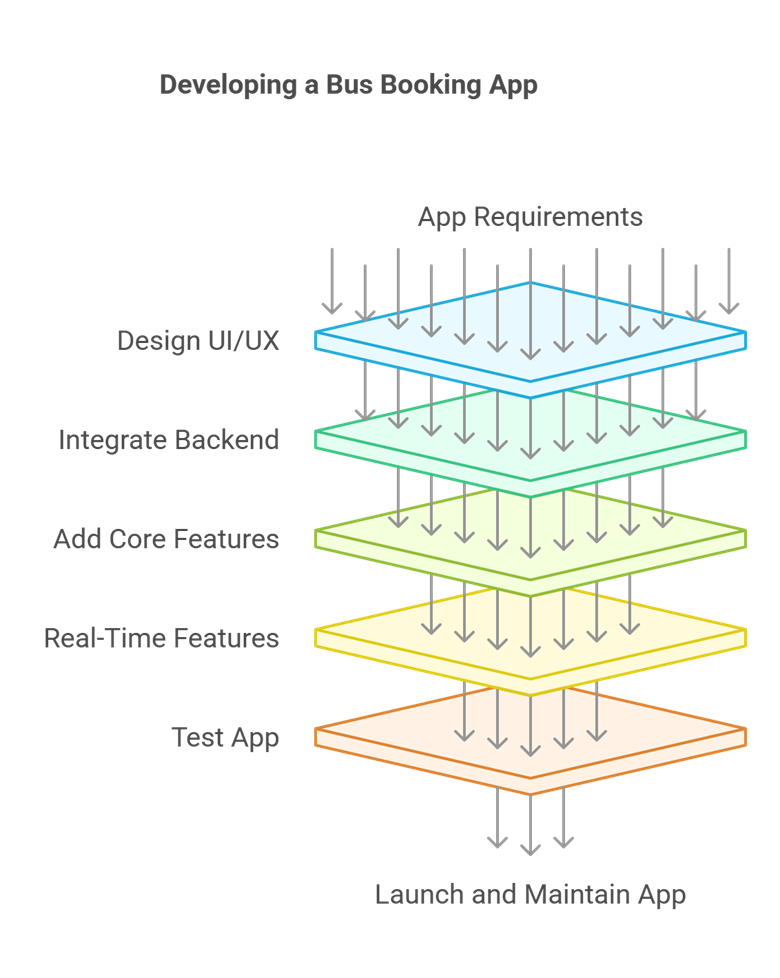
Step-by-Step Development Approach
Building a bus ticket booking and fleet management application using FlutterFlow involves a structured and well-planned approach as part of Bus Ticket Booking & Fleet Management App Development in Australia. Each phase of development plays a critical role in ensuring scalability, performance, and long-term success, especially for transport businesses operating in Australia. Below is a detailed step-by-step breakdown of the development process.
Step 1: Define Business & Technical Requirements
The first and most critical step is clearly defining the business and technical requirements of the application. This involves understanding passenger journeys, such as how users will search for buses, book tickets, make payments, and receive notifications in a Bus booking app in Australia. At the same time, fleet operations must be mapped in detail, including bus availability, route assignments, driver scheduling, and maintenance workflows. Admin permissions also need careful planning to ensure role-based access for operators, managers, and support teams. Clearly documenting these requirements helps avoid scope creep, aligns stakeholders, and creates a strong foundation for both frontend and backend development.
Step 2: Design UI/UX in FlutterFlow
Once requirements are finalized, the next step is designing intuitive and user-friendly interfaces using FlutterFlow’s visual UI builder. The passenger app should focus on simplicity, quick navigation, and minimal friction during booking and payments. The operator dashboard requires a more data-driven design, enabling easy access to fleet status, routes, and schedules. The admin panel should present analytics, reports, and system controls in a clear and actionable format. FlutterFlow allows designers and developers to collaborate efficiently, test UI flows early, and ensure consistent design across mobile and web platforms, which is essential for delivering a professional FlutterFlow transport app.
Step 3: Backend Integration
Backend integration is the backbone of any bus booking and fleet management app. FlutterFlow supports seamless integration with backend platforms such as Firebase, Supabase, and Xano, enabling secure authentication, real-time databases, and scalable APIs. This step involves setting up user authentication, defining database schemas for buses, routes, drivers, and bookings, and connecting APIs for payments, maps, and notifications. A well-structured backend ensures data consistency, fast performance, and secure handling of sensitive information, which is particularly important for payment processing and advanced Fleet management app development.
Step 4: Implement Core Booking & Fleet Features
After backend integration, core functionalities are implemented across the application. For passengers, this includes search and filter options, ticket booking flows, seat selection, and secure payment processing. On the operator side, fleet and route management features are developed to handle bus assignments, schedules, and availability. FlutterFlow’s logic builder makes it easier to connect frontend actions with backend data, ensuring smooth interactions across the system. This step focuses on turning designs into fully functional workflows that support both customer convenience and operational efficiency within Bus Ticket Booking & Fleet Management App Development in Australia.
Step 5: Add Real-Time Capabilities
Real-time functionality is essential for modern transport applications. This step involves implementing live bus tracking using GPS data, enabling passengers to view real-time locations and estimated arrival times. Push notifications are added to deliver booking confirmations, trip reminders, and alerts for delays or cancellations. Status updates for trips, buses, and drivers help operators maintain full visibility over ongoing operations. FlutterFlow’s real-time data handling capabilities, combined with backend services, ensure that updates are reflected instantly across the app, improving reliability and user trust in a scalable Bus booking app in Australia.
Step 6: Testing & Quality Assurance
Before launching the application, thorough testing and quality assurance are essential. Functional testing ensures that all features, such as booking, payments, tracking, and notifications, work as expected across different devices. Performance testing helps identify bottlenecks and ensures the app can handle peak traffic during high-demand periods. Security checks are also crucial to protect user data, payment information, and operational systems. This phase helps identify and fix issues early, reducing the risk of failures after launch and ensuring a smooth user experience for both passengers and operators involved in Fleet management app development.
Step 7: Deployment & Ongoing Maintenance
The final step involves deploying the application to the App Store and Google Play Store, following platform-specific guidelines and compliance requirements. Once launched, continuous monitoring is necessary to track performance, user behavior, and operational metrics. Ongoing maintenance includes bug fixes, feature enhancements, and updates based on user feedback and business growth. FlutterFlow makes it easier to roll out updates quickly, ensuring the app remains competitive, secure, and aligned with evolving transport industry needs in Australia as a future-ready FlutterFlow transport app.
5. Benefits of Developing a Bus Ticket Booking & Fleet Management App
Developing a modern bus ticket-booking and fleet-management application delivers measurable benefits across customer experience, operations, safety, and revenue as part of Bus Ticket Booking & Fleet Management App Development in Australia. Below is a detailed explanation of each key advantage, with practical examples to show real-world impact.
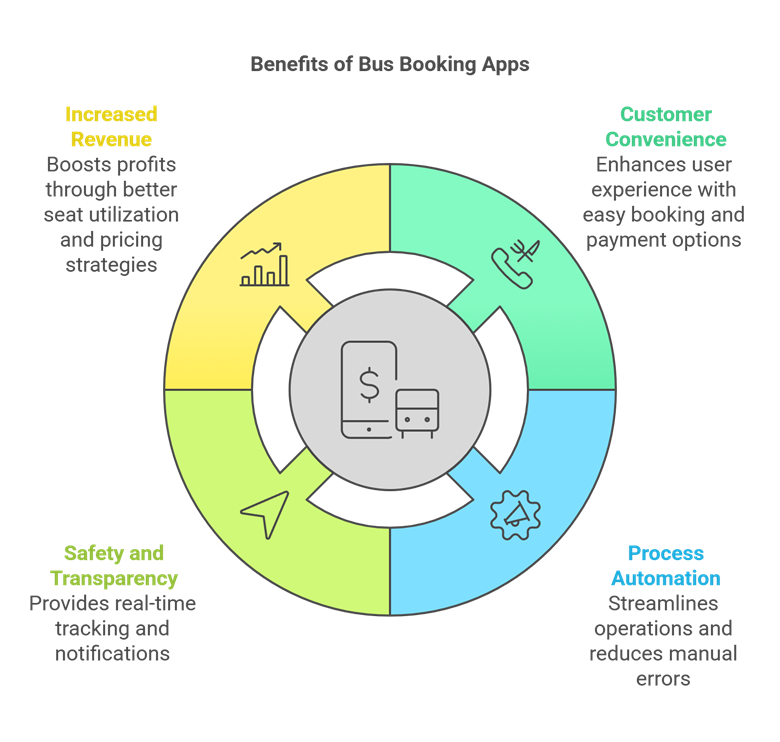
1. Enhanced Customer Convenience
Customer convenience is one of the most significant advantages of a digital bus ticket booking application. Passengers today expect a fast, intuitive, and mobile-first experience. A dedicated app allows users to search routes, compare prices, select seats, make secure payments, and access digital tickets from anywhere, without visiting physical counters or relying on third-party agents through a modern Bus booking app in Australia.
For example, a commuter traveling between Melbourne and Geelong can quickly check available buses, view seat layouts, choose preferred timings, and complete the booking within minutes. Features such as saved passenger details, multiple payment options, and instant booking confirmations reduce friction and improve the overall experience. Real-time notifications and trip reminders further ensure that passengers stay informed, minimizing missed buses and last-minute confusion.
Additionally, live bus tracking adds another layer of convenience. Passengers can monitor the bus’s location and estimated arrival time, allowing them to plan their journey more efficiently. Over time, this seamless experience builds trust, encourages repeat bookings, and increases brand loyalty. For operators, improved convenience directly translates into higher customer retention and positive word-of-mouth, which is critical in competitive transport markets using a scalable FlutterFlow transport app.
2. Automation of Manual Booking Operations
Manual booking operations involve physical ticket counters, spreadsheets, phone calls, and paperwork, all of which are inefficient and prone to errors. A bus ticket booking and fleet management app automates these processes, significantly reducing operational complexity as part of Fleet management app development. Tasks such as seat allocation, fare calculation, booking confirmations, cancellations, and refunds can be handled automatically through the system.
For instance, instead of staff manually assigning seats or updating availability, the system dynamically manages seat inventory in real time. When a passenger books a ticket, the seat is instantly reserved, payment is recorded, and confirmation is sent automatically. This eliminates double bookings, pricing inconsistencies, and human errors.
Automation also reduces staffing costs and administrative overhead. Operators can manage multiple routes and buses with fewer manual interventions, allowing staff to focus on customer support and service quality. As the business grows, automated systems scale effortlessly, enabling operators to expand routes or fleets without proportionally increasing operational workload.
3. Real-Time Tracking for Safety and Transparency
Real-time tracking is a critical feature for both passenger confidence and operational control. By integrating GPS-based tracking, bus operators can provide live location updates and accurate estimated arrival times to passengers. This transparency reduces uncertainty and improves trust, particularly for long-distance or late-night travel within Bus Ticket Booking & Fleet Management App Development in Australia.
From a safety perspective, real-time tracking allows operators to monitor fleet movement continuously. If a bus is delayed, deviates from its route, or encounters an emergency, operators can respond immediately. For example, if a bus traveling between Sydney and Canberra experiences a breakdown, operators can instantly notify passengers, arrange alternate transportation, and update ETAs through the app.
Transparency also benefits internal operations. Fleet managers can analyze travel patterns, identify bottlenecks, and ensure compliance with schedules. Over time, this data helps improve route planning, safety protocols, and service reliability, strengthening the operator’s reputation and passenger trust through effective Fleet management app development.
4. Improved Operational Efficiency
A fleet management app centralizes control over buses, drivers, routes, and schedules, leading to significant improvements in operational efficiency. Operators gain a real-time overview of fleet availability, driver assignments, ongoing trips, and upcoming schedules, all from a single dashboard within a robust FlutterFlow transport app.
For example, during peak hours in urban areas like Brisbane or Perth, operators can analyze demand patterns and adjust bus frequency accordingly. Route optimization tools help reduce fuel consumption, avoid congestion, and improve on-time performance. Maintenance scheduling ensures that vehicles are serviced proactively, reducing unexpected breakdowns and downtime.
Driver management features further enhance efficiency by tracking attendance, performance, and trip completion rates. Combined with analytics, these insights allow operators to make data-driven decisions, allocate resources more effectively, and maintain consistent service quality. The result is smoother operations, lower costs, and better scalability for a growing Bus booking app in Australia.
5. Increased Revenue for Bus Operators
A digital bus booking and fleet management platform directly contributes to increased revenue through better resource utilization and improved customer engagement, as part of Bus Ticket Booking & Fleet Management App Development in Australia. Online booking expands reach beyond physical counters, enabling operators to attract more passengers, including tourists and remote users.
Dynamic pricing strategies can be implemented based on demand, seat availability, and peak travel periods. For example, fares can be adjusted during high-demand holiday seasons or peak commuting hours, maximizing revenue without compromising occupancy. Reduced cancellations and no-shows, thanks to reminders and real-time updates, also improve seat utilization.
Analytics play a crucial role in revenue growth by identifying high-performing routes, underutilized buses, and emerging travel trends. Operators can optimize schedules, introduce new routes, or discontinue unprofitable ones based on data-driven insights. Over time, improved efficiency, better customer retention, and smarter pricing strategies lead to sustainable revenue growth and long-term profitability through advanced Fleet management app development.
6. Bus Ticket Booking App Development Cost in Australia
The cost of developing a bus ticket booking and fleet management application in Australia can vary significantly depending on business requirements, technical complexity, and long-term scalability goals as part of Bus Ticket Booking & Fleet Management App Development in Australia. Unlike simple consumer apps, transport platforms involve real-time data, integrations, operational dashboards, and compliance considerations, all of which influence development costs. Understanding these factors helps businesses plan budgets more effectively and choose the right development approach.
6.1 Cost Breakdown Factors
One of the primary cost drivers is the scope of functionality. A basic bus booking app with search, booking, and payment features will cost less than a full-scale platform that includes fleet management, driver tracking, live GPS monitoring, analytics, and AI-powered insights as part of advanced Fleet management app development. Each additional feature adds design, development, testing, and maintenance effort.
App complexity also plays a major role in determining costs. Applications that support multiple user roles—such as passengers, drivers, operators, and administrators—require more complex logic, permissions, and workflows. Real-time features like live tracking, instant notifications, and dynamic pricing further increase technical complexity, especially when high reliability and performance are required for a scalable Bus booking app in Australia.
The development timeline directly impacts cost as well. Faster delivery often requires larger teams or more experienced developers, while longer timelines increase overall labor costs. In Australia, traditional native app development can take several months, significantly increasing expenses compared to a modern FlutterFlow transport app approach.
Finally, third-party integrations influence the budget. Integrations with payment gateways, Google Maps, SMS services, email platforms, and analytics tools often involve additional development effort and ongoing service fees. While these integrations are essential for a modern bus booking system, they must be carefully planned to balance functionality and cost within Bus Ticket Booking & Fleet Management App Development in Australia.
6.2 How FlutterFlow Reduces Development Costs
FlutterFlow significantly reduces development costs by simplifying and accelerating the app development process. Its visual development approach lowers overall development effort by minimizing the amount of custom code required, while still allowing flexibility for complex logic and integrations commonly needed in Fleet management app development.
Faster delivery is another major cost advantage. FlutterFlow enables cross-platform development for Android, iOS, and web from a single codebase, eliminating the need to build and maintain separate native apps. This drastically reduces development time, allowing businesses to launch their platforms more quickly and start generating revenue sooner with a competitive Bus booking app in Australia.
Maintenance costs are also lower with FlutterFlow. Updates, bug fixes, and feature enhancements can be implemented more efficiently, without extensive redevelopment. This is especially valuable for transport operators who need to continuously adapt routes, pricing, and operations based on market demand using a scalable FlutterFlow transport app.
FlutterFlow Pricing Overview
FlutterFlow offers flexible pricing plans that suit different business stages. The Basic Plan, priced at $30 per month, is suitable for early-stage MVPs and prototypes. The Pro Plan, at $70 per month, supports more advanced features, integrations, and production-ready applications. The Teams Plan, also priced at $70 per user per month, is designed for collaborative development environments and larger teams.
Compared to traditional development costs in Australia, FlutterFlow’s pricing is minimal and delivers substantial value by reducing overall development, deployment, and maintenance expenses for Bus Ticket Booking & Fleet Management App Development in Australia.
7. Why Work with a FlutterFlow Development Agency?
While FlutterFlow enables faster and more cost-effective app development, building a production-ready bus ticket booking and fleet management platform still requires deep technical expertise and domain understanding as part of Bus Ticket Booking & Fleet Management App Development in Australia. Transport applications involve real-time data, complex workflows, secure payments, and scalable infrastructure. Working with a specialized FlutterFlow development agency ensures that the platform is not only built quickly but also architected correctly for long-term growth and reliability.
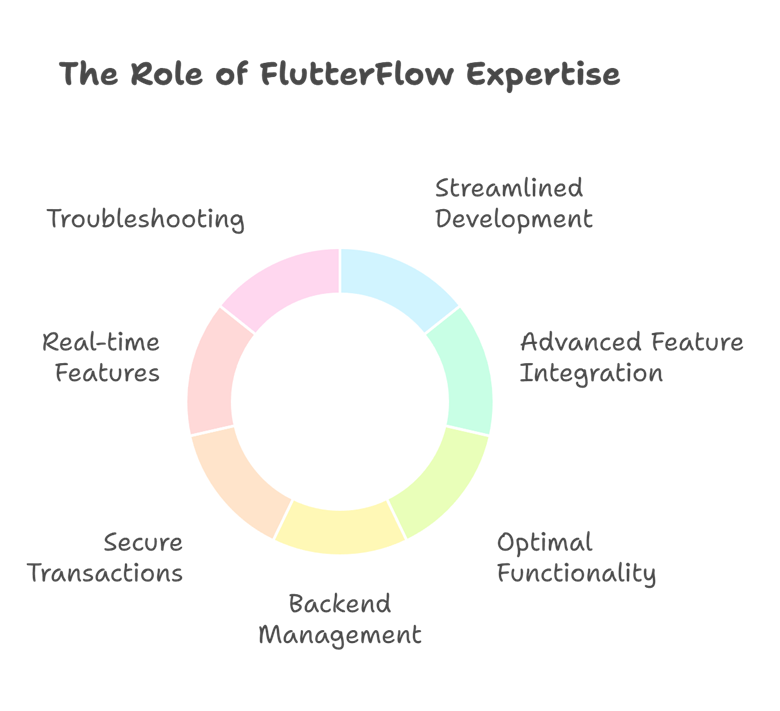
7.1 Importance of FlutterFlow Expertise
FlutterFlow expertise is critical when developing complex, enterprise-grade transport applications. A skilled agency understands how to design a scalable architecture that can handle growing user bases, increased booking volumes, and expanding fleets without performance degradation for a modern Bus booking app in Australia. Proper data modeling, efficient state management, and optimized workflows are essential to ensure the application remains responsive under peak load conditions.
Secure integrations are another key area where expertise matters. Bus booking platforms handle sensitive data such as user information, payment details, and operational metrics. An experienced FlutterFlow agency ensures secure authentication, role-based access control, and safe integration with third-party services such as payment gateways, mapping APIs, and notification systems. This reduces security risks and ensures compliance with industry standards in large-scale Fleet management app development.
Performance optimization is equally important. From fast-loading search results to real-time tracking and notifications, every interaction must be smooth and reliable. FlutterFlow experts know how to optimize queries, manage real-time data efficiently, and reduce unnecessary API calls, resulting in better performance and improved user experience across mobile and web platforms within a scalable FlutterFlow transport app.
7.2 How FlutterflowDevs Helps Build Enterprise-Grade Bus Apps
FlutterflowDevs offers end-to-end FlutterFlow development services tailored specifically for complex transport and mobility platforms. From requirement analysis and UI/UX design to backend integration, testing, and deployment, the team manages the entire development lifecycle. This ensures consistency, faster delivery, and reduced coordination overhead for clients seeking Bus Ticket Booking & Fleet Management App Development in Australia.
With strong experience in fleet and transport-related applications, FlutterflowDevs understands the unique challenges faced by bus operators, including route optimization, fleet availability, driver management, and real-time tracking. This domain expertise allows the team to design solutions that are practical, scalable, and aligned with real-world operational needs through advanced Fleet management app development.
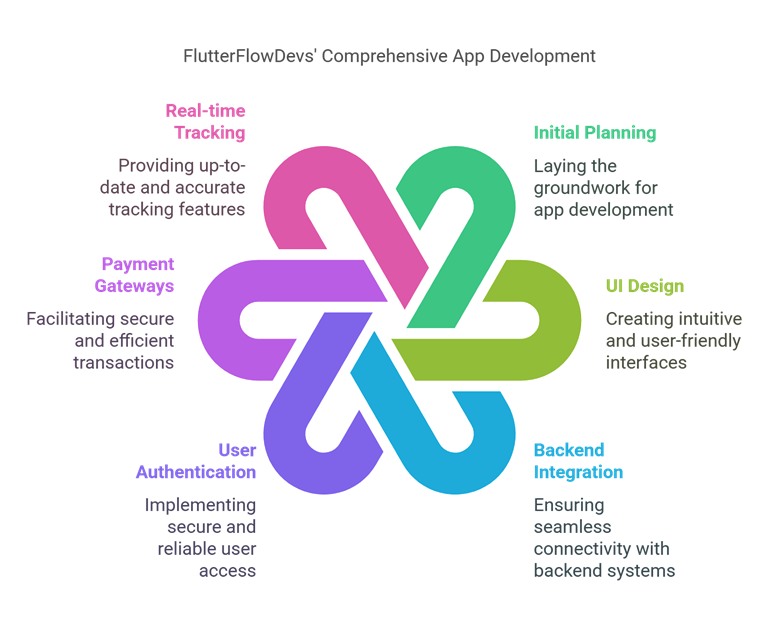
FlutterflowDevs also follows an Australia-focused deployment strategy, considering local market expectations, payment preferences, performance requirements, and compliance considerations. This localized approach ensures that bus booking and fleet management apps are not only technically robust but also well-suited for the Australian transport ecosystem as a high-performing Bus booking app in Australia.
8. Our Expertise & Experience
At FlutterflowDevs, we bring deep technical expertise and proven industry experience to the development of bus ticket booking and fleet management applications as part of Bus Ticket Booking & Fleet Management App Development in Australia. Our team consists of FlutterFlow-certified experts who specialize in building scalable, high-performance cross-platform applications for Android, iOS, and web. With a strong understanding of FlutterFlow’s architecture, integrations, and optimization techniques, we ensure that every application is built to enterprise standards and ready for long-term growth as a reliable FlutterFlow transport app.
We have extensive experience working across transport, logistics, and mobility platforms, which allows us to understand the operational challenges faced by bus operators and transport businesses. From managing real-time fleet data and driver workflows to implementing secure payment systems and live tracking, our solutions are designed to solve real-world problems commonly seen in Fleet management app development. This domain knowledge enables us to design systems that are not only technically robust but also practical and easy to operate in day-to-day transport environments.
Our proven track record includes delivering scalable and secure applications for startups, growing businesses, and enterprise clients. We focus on performance, reliability, and maintainability, ensuring that applications can handle increasing user loads, expanding fleets, and evolving feature requirements. By combining FlutterFlow expertise with strong backend integrations and a clear understanding of business goals, FlutterFlowDevs consistently delivers transport solutions that drive efficiency, improve customer experience, and support sustainable growth through a modern Bus booking app in Australia.
9. Conclusion
Australia's bus and transport industry is undergoing rapid digital transformation as passenger expectations continue to evolve and operators seek greater efficiency. Today, investing in a bus ticket booking and fleet management app is no longer optional—it is a strategic necessity for transport businesses looking to remain competitive and scale effectively.
Modern transport applications enable seamless ticket booking, real-time bus tracking, secure digital payments, and instant notifications for passengers. Meanwhile, advanced fleet management features such as route optimization, driver management, vehicle monitoring, and analytics help operators streamline operations, reduce costs, and improve service reliability.
FlutterFlow has emerged as an ideal platform for building these next-generation transport solutions. Its no-code and low-code capabilities allow businesses to develop scalable, high-performance applications for mobile and web from a single codebase, significantly reducing development time and costs. Combined with backend integrations and automation tools, FlutterFlow enables transport companies to build future-ready digital platforms.
At FlutterFlowDevs, we specialize in developing secure, scalable, and high-performance transport applications tailored to Australian market requirements. From architecture and integrations to deployment and long-term support, our team helps businesses modernize their transport operations with confidence.
As the future of mobility becomes increasingly digital, now is the time to invest in smart transport solutions that enhance customer experiences, optimize operations, and drive sustainable growth.


View more blogs
.png)
.png)
.jpg)
.png)

%20%5Bweb-search%5D_a_change__2025__to__20.jpg)
.png)

.png)


Ready to develop your own product? Get in touch today!
Get in Touch
