

.png)

.png)


1. Introduction
Most founders underestimate how difficult dating apps are to build.
At first glance, a swipe app looks simple, profiles, matching, chat, maybe subscriptions. But once development starts, the complexity grows fast. A real Tinder Clone App needs smooth swipe interactions, real-time messaging, notifications, moderation systems, scalable backend architecture, and engagement flows that actually keep users active.
And users notice everything.
If matching feels delayed, chat feels unreliable, or onboarding takes too long, retention drops almost immediately. That’s why modern dating apps are no longer competing only on features. They compete on experience.
At Arixlabs, we kept seeing the same problem repeat itself. Founders wanted to launch a modern Tinder app clone, but most teams ended up spending months rebuilding infrastructure that already exists across almost every swipe-based platform. The result was usually the same, longer timelines, higher development costs, and unfinished MVPs struggling to gain traction.
That’s exactly why we built Vynce.
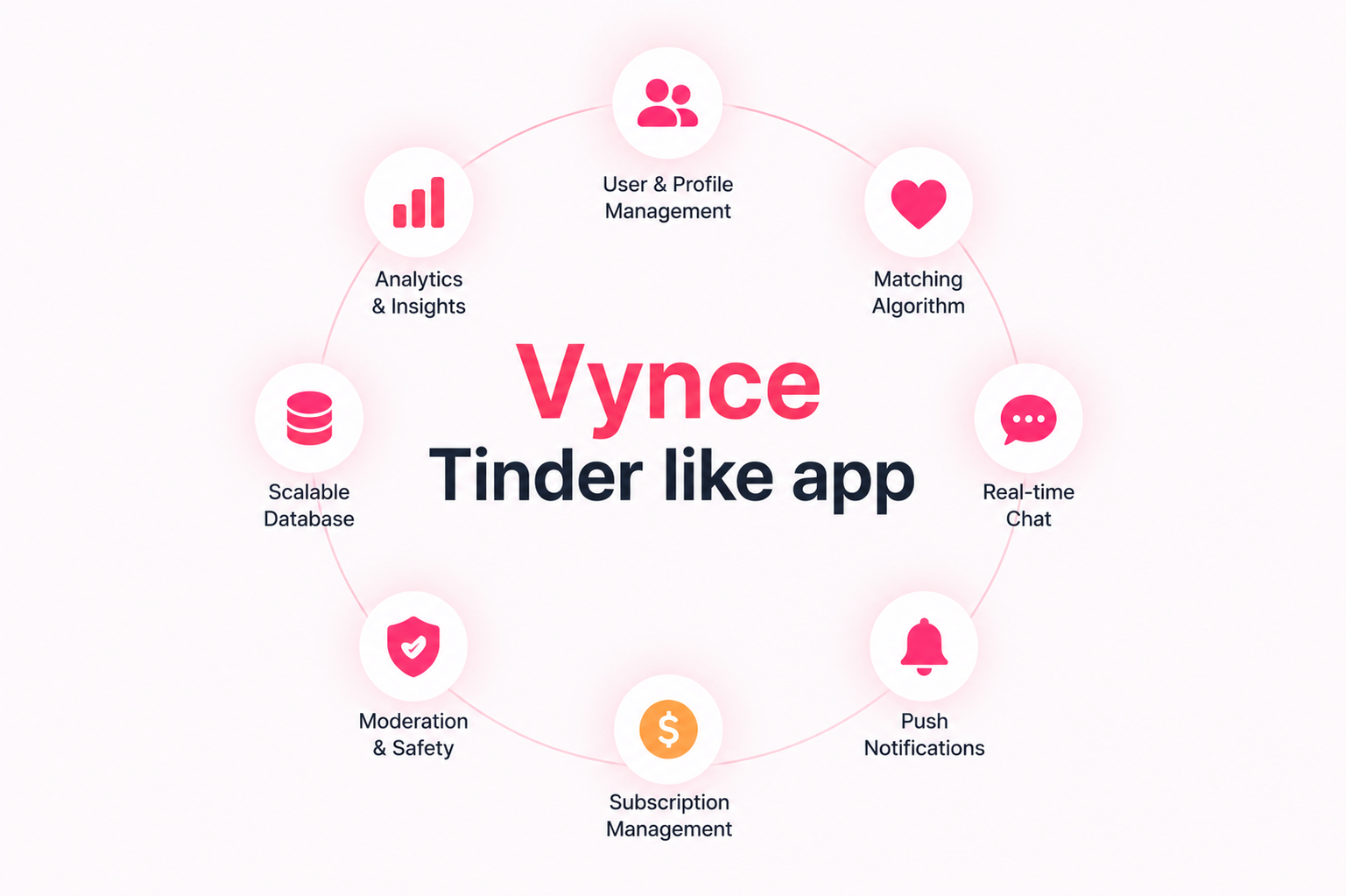
Vynce is our production-ready Tinder template designed for founders who want to launch faster without starting from zero. Instead of manually rebuilding swipe systems, chat infrastructure, subscriptions, and user flows with custom tinder code, vynce already includes the core architecture needed for a scalable dating platform.
The goal was never to create just another generic dating app template.
We wanted to build something that feels closer to a real product — smooth interactions, scalable systems, modern UI, and monetization flows built around how early-stage dating apps actually grow. Features like subscription-based chat access and expanded swipe limits are already structured into the platform, making it easier for founders to focus on branding, growth, and launch strategy instead of rebuilding backend systems repeatedly.
Because honestly, in this category, speed matters more than most people realize.
2. What Actually Goes Into Building a Tinder Clone App?
A lot of founders assume a Tinder Clone App is mostly a frontend project.
A swipe screen. A few profile cards. Some matching logic. Maybe chat.
Then development starts.
And suddenly the project needs:
- real-time infrastructure,
- notification systems,
- scalable databases,
- moderation tools,
- subscription handling,
- recommendation logic,
- image optimization,
- and stable chat architecture that works across thousands of users.
That’s usually the point where timelines begin stretching far beyond the original estimate.
The challenge with building a modern Tinder app clone is that almost every feature depends on another system working correctly behind the scenes. Swipe interactions connect to matching logic. Matching logic connects to chat permissions. Notifications connect to user activity triggers. Subscriptions connect to feature access. Even something as simple as profile discovery requires filtering, recommendation handling, and engagement tracking happening constantly in the background.
This is where many early-stage products become unstable.
A lot of teams focus heavily on UI first, but the backend complexity of a scalable Tinder Clone App is usually what slows development down. Real-time chat alone can become a major engineering task if the infrastructure is not planned correctly from the beginning.
That’s one of the reasons we structured vynce the way we did at Arixlabs.
Instead of treating the app like a visual clone with disconnected screens, vynce was designed more like a real product architecture. The swipe flows, chat systems, subscriptions, onboarding, and core engagement logic are already connected inside the platform. Founders still customize the branding and experience, but they avoid spending months rebuilding standard dating infrastructure manually with custom tinder code.
And honestly, that changes the launch process completely.
A production-ready Tinder template is not just about saving development time. It also reduces the amount of technical decision-making founders need to handle early on. Database structure, authentication flow, subscription gating, notification handling, and scalable user management are already part of the system.
That matters because dating apps depend heavily on consistency.
If messages fail, users leave.
If notifications feel delayed, users disengage.
If onboarding feels confusing, retention drops fast.
The user experience inside a Tinder app clone has to feel smooth immediately, especially during the first few minutes after signup. Most users decide very quickly whether they’ll continue using the app or uninstall it entirely.
That’s also why reusable systems became much more common across the industry. Startups realized they were repeatedly rebuilding the same swipe architecture, the same onboarding logic, and the same chat flows over and over again. A scalable tinder script shortens that process significantly because the foundational infrastructure already exists.
Another thing founders often overlook is moderation.
The moment a dating app starts gaining users, moderation becomes unavoidable:
- fake accounts,
- spam,
- abusive behavior,
- inactive profiles,
- reporting systems,
- and engagement abuse.
Without admin controls and proper backend structure, these problems grow quickly. A modern dating app template needs to handle more than just swiping and messaging. It also needs systems that help the platform remain usable as the user base grows.
That’s why vynce was built with both user-side and admin-side workflows in mind. The goal was not simply to recreate Tinder’s interface. The goal was to create a practical foundation founders could realistically launch, customize, and scale.
Because in reality, most dating app failures are not caused by lack of ideas.
They fail because the infrastructure underneath the product was never stable enough to support growth.
3. The Features Users Expect Before They Even Download a Dating App
The dating app market became much harder over the last few years.
Users now expect polished onboarding, smooth interactions, fast chat systems, and reliable matching experiences immediately after installing the app. A modern Tinder Clone App cannot feel like an unfinished MVP anymore because users compare every new platform with apps they already use daily.
That’s exactly why feature quality matters more than feature quantity.
Most successful swipe apps are not overloaded with hundreds of tools. They focus on making the core experience feel smooth, engaging, and frictionless. And honestly, that’s the direction we followed while building vynce at Arixlabs.
3.1 User Features That Keep Dating Apps Engaging
The first few minutes inside a Tinder app clone usually decide whether users stay or uninstall the app completely.
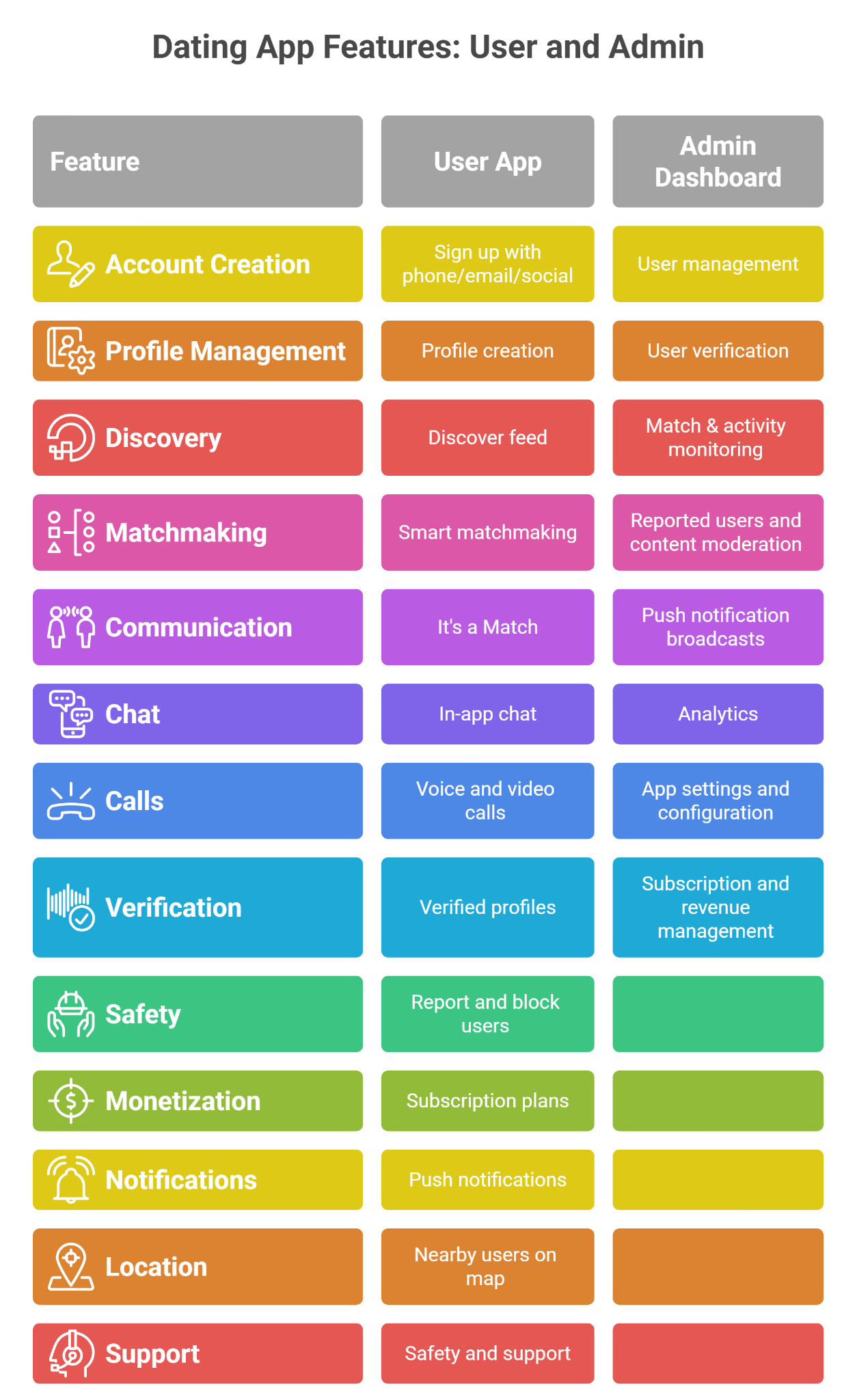
That’s why onboarding needs to feel simple and fast. Vynce supports:
- phone signup,
- email registration,
- and social login flows.
Reducing friction during registration improves activation rates significantly because users can enter the platform quickly instead of spending time filling endless forms.
Once users enter the app, profile quality becomes extremely important. Modern users expect:
- profile photos,
- bios,
- age information,
- interests,
- and location-based personalization.
A weak profile system creates weak engagement because matching starts feeling random very quickly.
That’s why vynce includes structured profile creation systems designed to make discovery feel more personal from the beginning. Inside a scalable Tinder template, profile depth directly affects interaction quality and retention.
The swipe system itself is still the core interaction layer of almost every successful Tinder Clone App.
But users now expect smarter discovery too.
Vynce includes matchmaking systems based on:
- preferences,
- interests,
- and user location.
Instead of random profile delivery, the app is designed to create more relevant recommendations, which naturally improves engagement across the platform.
The “It’s a Match” experience also plays a huge role psychologically. Instant match notifications create a reward loop that keeps users returning repeatedly. Most successful tinder script systems prioritize this interaction heavily because small feedback moments often drive long-term engagement.
Communication is another major retention factor.
A lot of dating platforms struggle because users match but never actually interact afterward. That’s why vynce includes:
- real-time chat,
- voice calls,
- video calls,
- and push notifications directly inside the platform.
These systems help conversations happen faster and feel more natural.
And from a monetization perspective, communication systems are also where many founders generate recurring revenue. Instead of stuffing the app with aggressive premium mechanics, vynce focuses on simpler subscription flows:
- free users receive limited access,
- premium users unlock additional chat access and expanded swipe usage.
That structure feels much cleaner for early-stage apps trying to scale sustainably.
Another important area is trust.
Every modern Tinder app clone eventually deals with fake accounts, spam, and safety concerns. Vynce includes:
- verified profiles,
- identity badges,
- report systems,
- block functionality,
- and safety support flows.
Users engage more when the platform feels actively moderated and trustworthy.
3.2 Admin Features That Help Dating Apps Scale Properly
A lot of founders focus only on frontend experience while ignoring operational infrastructure completely.
But a scalable dating app template also needs strong backend management systems.
Once users start joining the platform, admin workflows become essential:
- moderation,
- user verification,
- engagement monitoring,
- subscription management,
- and content control.
That’s why vynce includes a dedicated admin dashboard built for actual platform management instead of basic demo controls.
Admins can:
- verify users,
- suspend accounts,
- delete profiles,
- monitor matches and activity,
- manage subscriptions,
- and handle reported content directly from the dashboard.
The moderation side becomes especially important once growth starts accelerating. Without proper control systems, spam accounts and abusive behavior can damage retention very quickly inside a Tinder Clone App.
Analytics are another major part of scaling successfully.
Vynce includes tracking systems for:
- DAU,
- MAU,
- retention,
- match rate,
- and overall engagement behavior.
That data helps founders understand what users are actually doing inside the platform instead of relying on assumptions.
Push notification broadcasts are also integrated into the admin side, allowing platform owners to re-engage users through:
- activity alerts,
- new feature announcements,
- matches,
- and messaging reminders.
A lot of templates focus heavily on visuals while ignoring operational systems entirely. But long-term scalability usually depends more on backend workflows than frontend UI alone.
That’s one of the biggest differences between a simple swipe clone and a production-ready Tinder template designed for real launch and growth.
4. Why Most Dating App Projects Take Longer Than Founders Expect
A lot of founders enter the market thinking a Tinder Clone App can be built quickly.
At first, the product sounds manageable — swiping, matching, messaging, subscriptions, notifications. But once development begins, most teams realize they are not building a simple mobile app anymore. They are building a real-time social platform where almost every feature depends on multiple backend systems working together constantly.
That’s usually where timelines start breaking.
A modern Tinder app clone is heavily interconnected. Swiping affects matching logic. Matching affects messaging permissions. Messaging connects to notifications. Notifications influence retention. Subscriptions control feature access. Even profile discovery depends on recommendation systems running continuously behind the scenes.
And honestly, users notice every delay.
If matching feels slow, conversations lag, or onboarding becomes frustrating, retention drops immediately. A scalable Tinder Clone App has to feel smooth from the very first interaction because users already compare every new platform with apps like Tinder and Bumble.
4.1 Real-Time Communication Adds Huge Backend Complexity
Most development delays happen once communication systems enter the picture.
Real-time chat inside a Tinder app clone sounds simple until teams start building:
- message syncing,
- notification delivery,
- online activity handling,
- media sharing,
- voice communication,
- and video calling infrastructure.
The frontend UI is usually the easy part.
The difficult part is keeping everything stable while thousands of users interact at the same time. Even small delays make the platform feel unreliable. That’s why communication systems consume a huge amount of engineering time during Dating App Development.
Voice and video calls increase that complexity even more. A lot of founders underestimate how much backend architecture is needed to support real-time communication properly inside a production-level Tinder Clone App.
That’s one reason reusable systems became much more common recently. Instead of rebuilding large amounts of custom tinder code manually, many startups now begin with a scalable Tinder template where the core communication infrastructure already exists.
4.2 Matching Systems Need Continuous Optimization
Good matchmaking systems are much harder to build than most people expect.
A lot of swipe apps fail because profile recommendations feel repetitive or completely random. Users stop engaging quickly when discovery loses relevance.
A scalable tinder script needs to constantly balance:
- user preferences,
- interests,
- location,
- activity,
- profile quality,
- and engagement behavior.
That optimization process usually continues even after launch because user behavior changes constantly inside a growing Tinder app clone.
This is exactly why many founders no longer want to rebuild matchmaking systems from scratch. A production-ready dating app template already includes the core infrastructure needed for swipe logic, recommendation handling, and engagement tracking.
At Arixlabs, we designed vynce around those exact problems. Instead of creating a basic UI clone, the goal was to build a scalable Tinder template with real operational infrastructure already connected underneath the experience.
4.3 Moderation Problems Appear Faster Than Expected
Moderation becomes a major challenge the moment a dating platform starts gaining traction.
Fake accounts, spam profiles, abusive behavior, reporting systems, verification handling — all of these become operational problems very quickly inside a growing Tinder Clone App.
A lot of founders focus heavily on frontend experience early on but underestimate how important backend moderation systems become later.
That’s why vynce includes:
- verified profiles,
- reporting systems,
- block functionality,
- moderation controls,
- and admin-side management tools directly inside the platform.
Without these systems, scaling a Tinder app clone becomes extremely difficult because platform quality starts declining as the user base grows.
4.4 Founders Want Faster Launch Cycles Now
The biggest shift happening in Dating App Development is speed.
Most startups no longer want to spend 8–12 months rebuilding swipe systems, messaging infrastructure, subscriptions, and operational tools manually using large amounts of custom tinder code.
They want to:
- validate faster,
- launch earlier,
- reduce development risk,
- and focus more on user growth.
That’s exactly why scalable platforms like vynce are becoming much more common.
Instead of starting from zero, founders can launch using a production-ready Tinder template that already includes:
- smart matchmaking,
- subscriptions,
- chat systems,
- voice and video calls,
- notifications,
- moderation workflows,
- and admin infrastructure.
A modern dating app template is no longer just about saving time. It’s about removing the slowest and most expensive part of building a Tinder Clone App from scratch.
And realistically, that changes the entire launch process for startups entering this market.
5. The Real Cost of Building a Tinder App Clone in 2026
One of the biggest misconceptions around Dating App Development is cost.
A lot of founders assume a Tinder Clone App mainly requires frontend screens and basic backend functionality. Then the project expands, timelines grow, and the budget starts increasing much faster than expected.
Because realistically, a scalable Tinder app clone is not a small product.
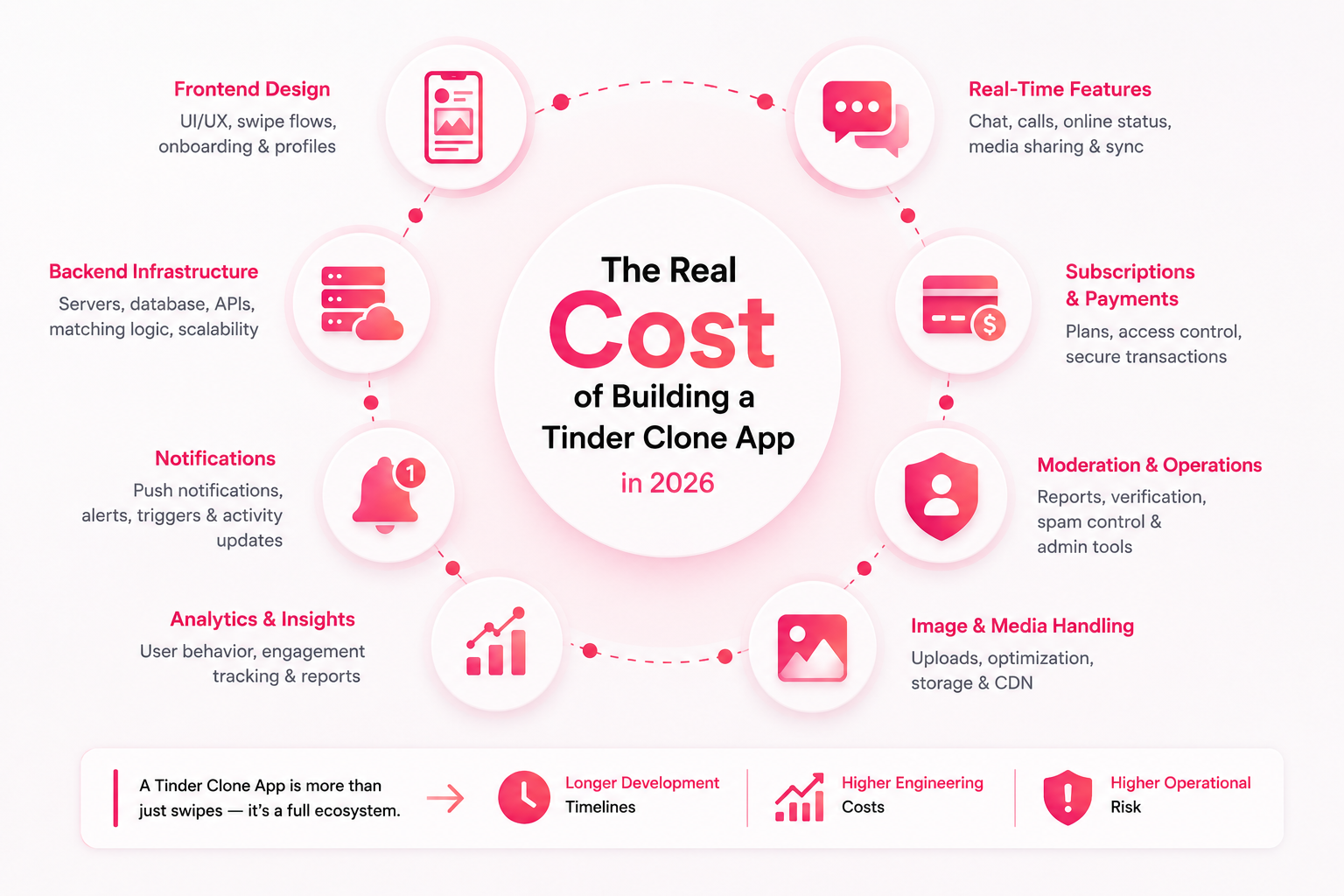
The swipe interface is only the visible layer. Underneath that sits:
- matchmaking infrastructure,
- real-time communication,
- subscriptions,
- moderation systems,
- notifications,
- analytics,
- and backend architecture capable of handling active users continuously.
That’s where most of the development cost actually comes from.
5.1 Frontend Design Is Only One Part of the Budget
UI and UX design usually become the first visible expense.
A modern Tinder Clone App needs smooth onboarding, polished profile flows, responsive swipe interactions, messaging interfaces, and consistent mobile performance across devices. Users expect everything to feel fast and intuitive immediately.
But frontend work is usually only a fraction of the total development process.
The expensive part is making all those interactions function reliably at scale.
That’s why many startups initially underestimate how much custom tinder code is required behind even simple-looking interactions.
5.2 Backend Infrastructure Becomes Expensive Quickly
Backend architecture is where budgets usually start growing aggressively.
A scalable Tinder app clone needs systems capable of handling:
- real-time chat,
- push notifications,
- subscriptions,
- matchmaking,
- media uploads,
- location services,
- and concurrent user activity.
Even a relatively small user base can create heavy infrastructure demands if the backend is not optimized properly.
This is one of the biggest reasons startups now prefer using a production-ready Tinder template instead of building every backend system manually from scratch. Rebuilding standard infrastructure repeatedly adds huge engineering costs without creating much competitive advantage.
At Arixlabs, we saw founders spending months rebuilding systems that already exist inside almost every swipe-based platform:
- matching flows,
- subscription systems,
- moderation controls,
- admin dashboards,
- and communication infrastructure.
That’s exactly why we built vynce as a scalable dating app template rather than just a visual clone.
5.3 Real-Time Features Increase Development Time Significantly
Communication systems are usually one of the most expensive parts of Dating App Development.
A lot of founders think messaging is straightforward until they start building:
- live chat syncing,
- voice calls,
- video calls,
- notification handling,
- online activity tracking,
- and media sharing systems.
A modern Tinder Clone App depends heavily on responsiveness because users expect interactions to happen instantly. Delayed notifications or unreliable chat systems damage engagement quickly.
And honestly, these systems take much longer to stabilize than most founders expect.
That’s why reusable infrastructure has become much more common across the industry. A scalable tinder script already includes the foundational architecture needed for real-time communication instead of forcing teams to rebuild everything manually with custom tinder code.
5.4 Moderation and Operations Add Hidden Costs
A lot of founders only calculate development costs.
Operational costs usually appear later.
Once a Tinder app clone starts gaining users, moderation becomes unavoidable:
- fake profiles,
- spam accounts,
- verification handling,
- report management,
- and subscription support all require operational infrastructure.
Without strong admin systems, scaling becomes difficult very quickly.
That’s why vynce includes built-in admin workflows for:
- moderation,
- analytics,
- subscription management,
- verification,
- and user activity monitoring.
These systems are not “extra features” anymore. They are standard infrastructure requirements for any scalable Tinder Clone App.
5.5 Why Startups Now Launch Using Templates Instead
The biggest reason founders choose a Tinder template today is not just convenience.
It’s economics.
Building a fully custom dating platform usually means:
- longer development timelines,
- larger engineering costs,
- delayed launch cycles,
- and significantly higher operational risk.
Meanwhile, a production-ready dating app template already includes:
- swipe systems,
- matchmaking logic,
- subscriptions,
- communication infrastructure,
- moderation tools,
- and operational dashboards.
That changes the entire financial equation for startups.
Instead of spending months rebuilding standard systems manually with large amounts of custom tinder code, founders can focus more on launch strategy, branding, user acquisition, and growth.
And realistically, that’s one of the biggest reasons scalable solutions like vynce are becoming increasingly common in modern Dating App Development.
6. Can a Tinder App Clone Actually Scale After Launch?
A lot of apps work well during testing.
The real challenge starts after growth.
Once users begin swiping, matching, chatting, and sending media constantly, a Tinder Clone App starts handling huge amounts of real-time activity behind the scenes. Chat systems, notifications, matchmaking, subscriptions, and moderation all need to work together smoothly without slowing down the experience.
That’s where many poorly built platforms start breaking.
A growing Tinder app clone cannot rely on unstable backend architecture or disconnected custom tinder code. Users expect:
- instant messaging,
- smooth swiping,
- fast notifications,
- reliable calls,
- and accurate recommendations from day one.
Even small delays hurt retention quickly.
6.1 Matchmaking Systems Become Much Heavier at Scale
The bigger a Tinder Clone App becomes, the harder profile discovery gets.
A scalable tinder script needs to continuously process:
- user preferences,
- interests,
- location,
- activity,
- and engagement behavior.
If recommendations start feeling random, users stop interacting.
That’s why matchmaking infrastructure is one of the most important parts of modern Dating App Development.
6.2 Moderation and Operations Matter More Than Most Founders Expect
Most founders focus heavily on frontend features early on.
But once a Tinder app clone grows, moderation becomes unavoidable. Fake accounts, spam, abuse reports, and inactive users can damage the platform quickly without proper admin systems.
That’s why vynce includes:
- verification systems,
- reporting flows,
- moderation controls,
- analytics,
- and subscription management directly inside the platform.
A scalable dating app template needs operational infrastructure just as much as frontend UI.
6.3 Why Startups Prefer Ready-Made Infrastructure Now
Most startups no longer want to spend months rebuilding swipe systems, subscriptions, notifications, and backend workflows manually with large amounts of custom tinder code.
Instead, founders now launch using scalable platforms like vynce — a production-ready Tinder template and dating app template designed for real user growth.
Rather than stabilizing unfinished infrastructure for months, teams can focus more on launch, branding, retention, and scaling the actual product.
And honestly, that’s becoming the smarter approach for modern Dating App Development.
7. Why Founders Are Launching Faster With Ready-Made Dating App Templates
The biggest change happening in Dating App Development is speed.
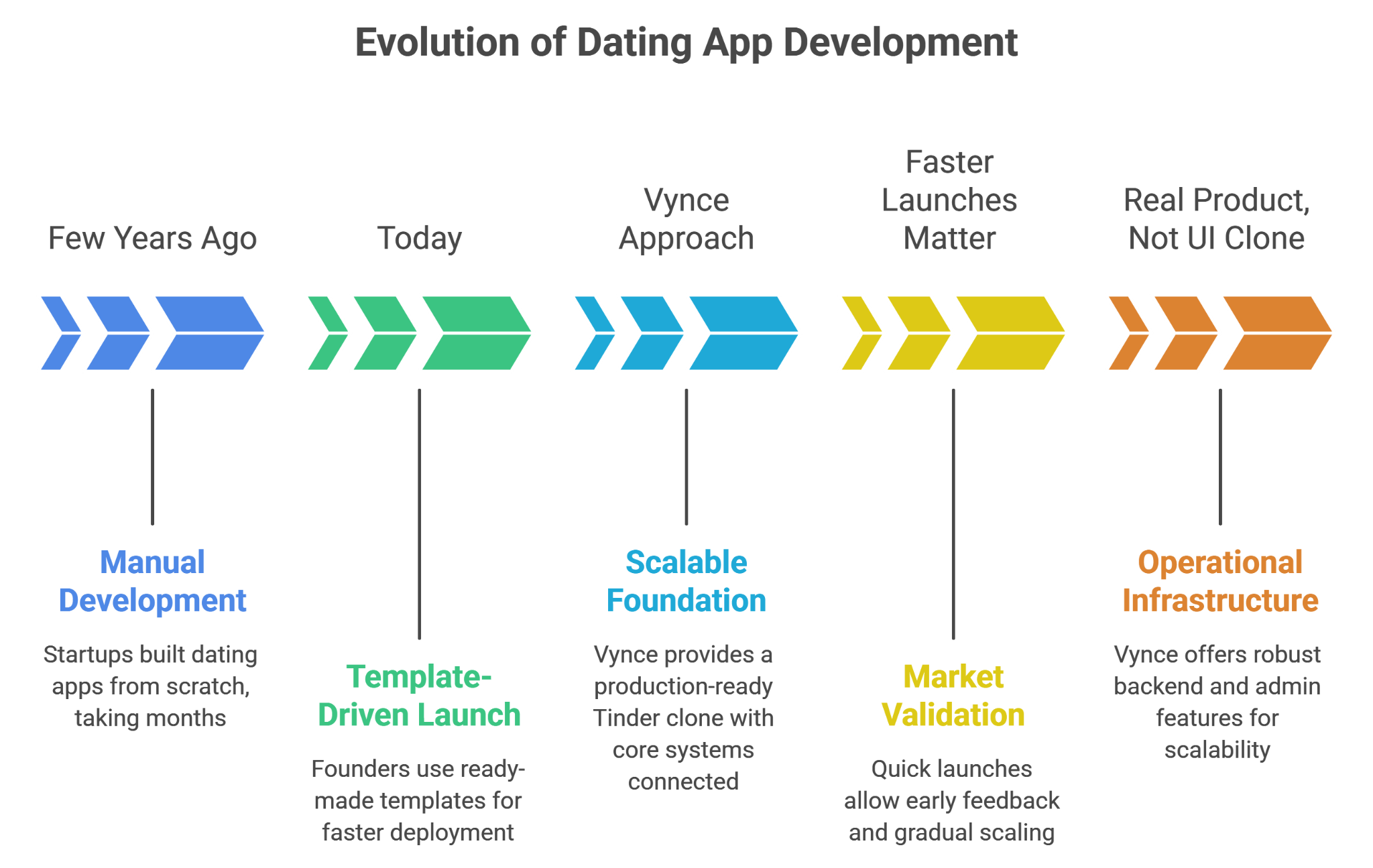
A few years ago, most startups built everything manually. Today, founders are moving toward scalable systems that already include the core infrastructure needed for a modern Tinder Clone App.
And honestly, that shift makes sense.
Building a Tinder app clone from scratch usually means spending months handling:
- swipe logic,
- matchmaking systems,
- subscriptions,
- real-time chat,
- notifications,
- moderation,
- and backend scaling.
Most of that work happens before the app even reaches real users.
That’s exactly why platforms like vynce exist.
Instead of starting with thousands of lines of custom tinder code, founders can launch using a production-ready Tinder template already structured around modern user expectations. The core systems are already connected:
- profile creation,
- smart matchmaking,
- subscriptions,
- messaging,
- voice and video calls,
- notifications,
- and moderation workflows.
A scalable dating app template removes a huge amount of repetitive engineering work from the launch process.
7.1 Faster Launches Matter More Than Perfect Features
A lot of startups fail because they spend too long building.
By the time development finishes, the market changes, budgets shrink, or momentum disappears completely. That’s one reason reusable infrastructure became much more important across modern Dating App Development.
Founders now care more about:
- launching quickly,
- validating early,
- improving through feedback,
- and scaling gradually.
A production-ready tinder script supports that approach much better than rebuilding every system manually.
With vynce, teams can customize branding, onboarding, matching flows, and monetization systems without rebuilding the entire backend architecture from zero. Instead of spending months stabilizing custom tinder code, founders can focus more on growth and user acquisition.
7.2 Vynce Was Built Like a Real Product, Not Just a UI Clone
A lot of templates look good visually but fall apart operationally.
That’s where vynce takes a different approach.
The platform was designed as a scalable Tinder Clone App foundation with:
- real-time communication,
- subscription systems,
- admin infrastructure,
- moderation workflows,
- analytics,
- and engagement flows already connected underneath the experience.
That matters because scaling a Tinder app clone becomes much easier when the operational infrastructure already exists from day one.
And realistically, that’s one of the biggest advantages of using a modern Tinder template instead of building everything manually from scratch.
8. Simple Monetization Models That Actually Work for Early Dating Apps
A lot of founders overcomplicate monetization during early Dating App Development.
They start planning boosts, gifts, advanced premium tiers, and complicated engagement mechanics before the product even has active users. But realistically, most successful early-stage platforms focus on much simpler monetization systems first.
That’s the approach we followed while building vynce.
Instead of stuffing the platform with unnecessary premium mechanics, this Tinder Clone App focuses on subscription-driven engagement. Free users can explore the platform normally, while premium subscriptions unlock:
- extended swipe access,
- expanded interaction limits,
- and subscription-based chat functionality.
That structure feels much more natural inside a modern Tinder app clone because monetization connects directly to user activity instead of interrupting the experience constantly.
And honestly, recurring subscriptions are usually the most stable revenue model for a scalable dating app template.
8.1 Why Subscription Models Work Better for Swipe Apps
Most users already understand subscription-based apps.
That makes onboarding and monetization much easier inside a modern Tinder template. Instead of explaining complicated premium mechanics, founders can focus on improving engagement while subscriptions support recurring revenue in the background.
This also creates cleaner product architecture.
A scalable tinder script becomes easier to manage when monetization is tied directly to usage patterns like:
- chat access,
- swipe expansion,
- and engagement-based unlocks.
That’s one reason many startups now avoid over-engineered monetization systems during early growth.
8.2 Monetization Should Support Retention, Not Hurt It
A poorly monetized Tinder Clone App usually feels frustrating very quickly.
Too many restrictions reduce engagement. Too many paywalls damage retention. The balance matters.
That’s why vynce was designed around lightweight monetization systems that still allow the app experience to feel smooth and social. Instead of overwhelming users with aggressive premium mechanics, the platform keeps monetization closely connected to interaction behavior.
And realistically, that approach fits modern Dating App Development much better.
A scalable Tinder template should not only help founders launch faster — it should also support long-term engagement without forcing complicated monetization systems into the product experience.
That’s exactly why simple subscription flows remain one of the strongest monetization strategies for a growing Tinder app clone.
FAQ
What is a Tinder Clone App?
A Tinder Clone App is a swipe-based dating platform inspired by apps like Tinder. It usually includes profile creation, matchmaking, swiping, chat systems, subscriptions, and real-time engagement features.
Is vynce a customizable Tinder template?
Yes. Vynce is a scalable Tinder template built for customization. Founders can modify branding, UI, matchmaking flows, subscriptions, onboarding, and engagement systems based on their product goals.
Can I launch a Tinder app clone without building everything from scratch?
Absolutely. That’s one of the biggest reasons founders now use a production-ready dating app template or scalable tinder script instead of spending months rebuilding infrastructure manually with custom tinder code.
Does vynce support subscriptions and premium access?
Yes. Vynce already includes subscription systems for premium chat access and expanded swipe functionality, making monetization easier during early Dating App Development.
Skip the Long Development Cycle and Launch Faster With Vynce
Building a scalable Tinder Clone App from scratch takes far more time and backend infrastructure than most founders expect. Swipe systems, matchmaking, subscriptions, chat architecture, moderation, notifications, and operational tools all need to work together smoothly before real growth even begins.
That’s exactly why we built vynce at Arixlabs.
Vynce is a production-ready Tinder template, scalable dating app template, and modern tinder script designed for founders who want to launch faster without rebuilding core systems manually with large amounts of custom tinder code.
Check out the vynce Tinder app clone template on the Arixlabs Marketplace →


.jpg)

.png)


.png)

%201.jpg)
Ready to develop your own product? Get in touch today!
Get in Touch
