

.png)

.png)


1. Why Startups Are Obsessed With Spotify Clone Apps
Audio platforms are becoming one of the most interesting startup categories right now. People spend hours every day listening to music, podcasts, workout audio, meditation tracks, and creator content. That level of engagement is exactly why demand for a Spotify clone app is growing so quickly.
Unlike many apps that struggle with retention, streaming products naturally become part of daily routines. Users create playlists, follow creators, personalize recommendations, and keep returning multiple times a day. That’s one reason founders are actively building apps like spotify instead of traditional utility apps.
The opportunity is much bigger than music too.
We’re seeing startups launch:
- podcast platforms,
- regional music apps,
- devotional streaming products,
- audiobook apps,
- fitness audio platforms,
- and creator-focused streaming communities.
At Arixlabs (previously FlutterFlowDevs), we kept noticing the same problem repeatedly. Founders wanted to launch streaming products fast, but most teams were spending months rebuilding common systems like playlist management, streaming flows, analytics, and backend infrastructure.
That’s exactly why we built LoopIt - A Music Streaming App.
LoopIt is our production-ready Spotify clone app template designed for startups that want to launch scalable streaming platforms faster without rebuilding everything from scratch. Instead of wasting months on repeated infrastructure work, founders can start with a customizable foundation and focus on growth, branding, and user acquisition.
And honestly, that matters because user expectations around apps like spotify are extremely high now. Even a modern Spotify clone apk needs smooth playback, smart recommendations, scalable architecture, analytics, and premium user experience from day one.
That’s also why conversations around Spotify system design are becoming more important. Building streaming infrastructure is much more complicated than most founders initially expect. Recommendation systems, playback synchronization, caching layers, streaming optimization, and backend scalability all increase development complexity quickly.
Which explains why more startups are now searching for scalable Spotify script solutions and launch-ready streaming products instead of building everything manually.
Because in this market, speed matters.
2. What Makes a Spotify Clone App Difficult to Build?
A modern Spotify clone app looks simple on the surface. Users open the app, play music, create playlists, and continue listening without thinking about the systems running underneath.
But building a scalable Spotify clone app is much harder than most founders expect.
Even a basic Spotify clone apk usually needs:
- streaming infrastructure
- recommendation systems
- playlist synchronization
- analytics
- scalable storage
- and backend optimization
The challenge becomes bigger because expectations around apps like spotify are extremely high now. Users expect instant playback, personalized recommendations, smart playlists, premium UX, and seamless streaming across devices.
That’s why conversations around Spotify system design have become increasingly important for streaming startups.
A scalable Spotify system design involves much more than audio playback. Recommendation engines, caching layers, search systems, and streaming optimization all need to work together continuously. Even a small issue in backend architecture can affect user retention inside apps like spotify.
This is something we repeatedly noticed at Arixlabs while working with founders building streaming products.
Many startups initially believed they only needed a UI and audio player. Later, they started struggling with infrastructure planning, scalability problems, and delayed MVP timelines. That experience heavily influenced why we built LoopIt.
Instead of creating another basic Spotify template, we focused on building reusable streaming infrastructure that startups could launch and customize quickly. The goal behind LoopIt was simple:
help founders avoid rebuilding the same streaming systems repeatedly.
Because once recommendations, notifications, analytics, and playback systems start interacting together, even a scalable Spotify script becomes complex very quickly.
That’s also why many startups now prefer launch-ready Spotify clone apk solutions instead of building everything from scratch.
3. The Hidden Engineering Behind Spotify System Design
Most founders think the difficult part of building a Spotify clone app is the design.
Usually, the real challenge starts after the UI is finished.
A scalable Spotify clone app needs far more than playlists and music playback. The backend architecture behind modern apps like spotify is extremely complex, especially once user activity starts growing.
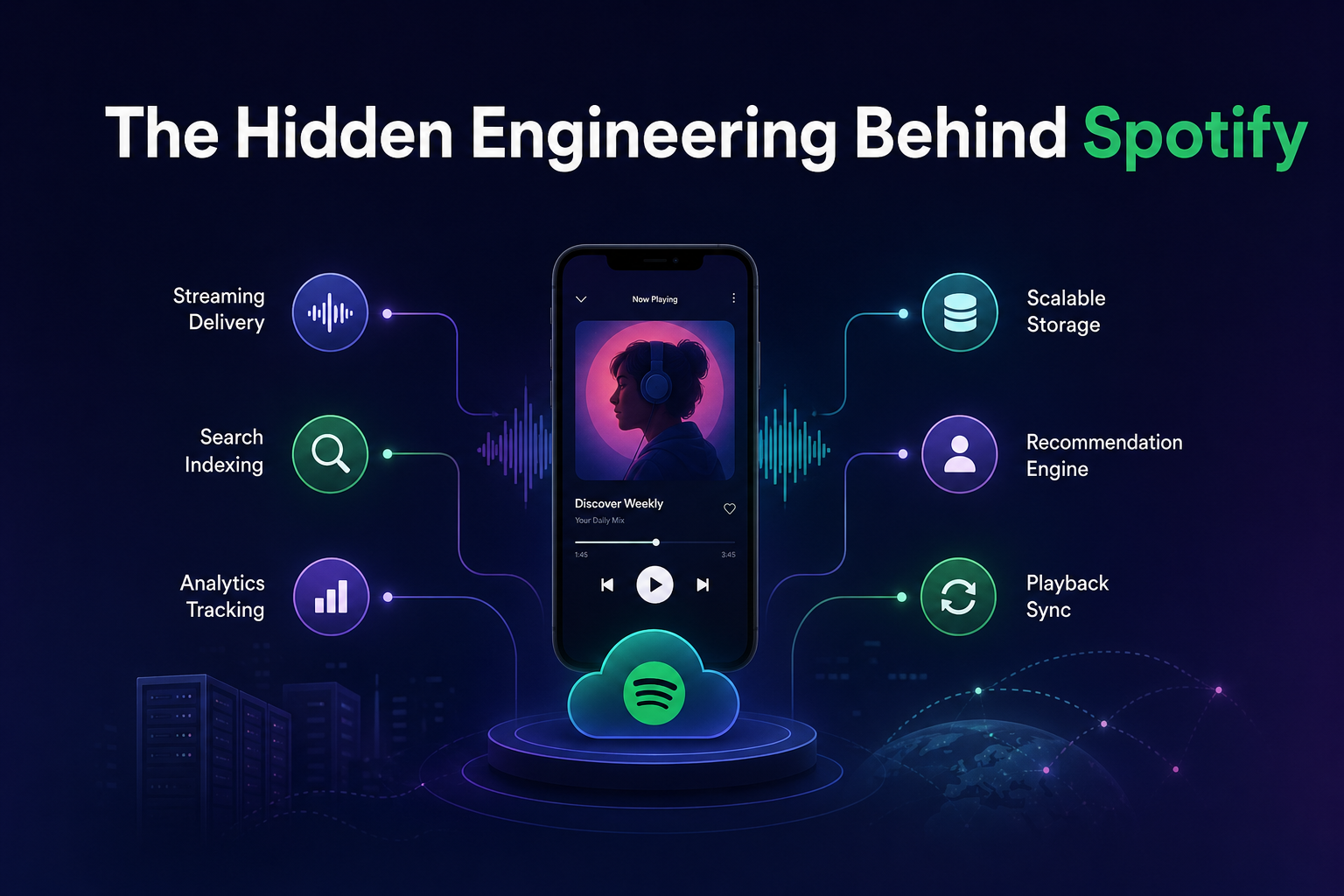
For example, every time someone presses play inside a Spotify clone apk, the system needs to handle:
- streaming delivery,
- buffering optimization,
- playback synchronization,
- search indexing,
- analytics tracking,
- recommendation systems,
- and scalable storage in real time.
That’s why Spotify system design has become such an important topic for streaming startups.
Users now expect apps like spotify to feel instant. Songs should load immediately. Recommendations should feel personalized. Playback should continue smoothly across devices. Search results should appear instantly. Even small delays can hurt retention inside a Spotify clone app.
And recommendation systems make things even harder.
A scalable Spotify system design constantly analyzes:
- listening history,
- playlist activity,
- skipped tracks,
- user preferences,
- search behavior,
- and session duration.
That data powers personalized discovery systems inside modern apps like spotify. But once user activity scales, backend complexity increases very quickly. This is one reason a production-ready Spotify script requires much more infrastructure planning than most founders expect.
Search infrastructure matters too.
A growing Spotify clone apk needs scalable indexing systems for artists, playlists, podcasts, albums, and recommendations. Add notifications, analytics, and premium memberships into the mix, and backend complexity rises even faster.
At Arixlabs, we kept noticing the same problem while building LoopIt.
Most startups wanted a scalable Spotify template, but many underestimated how difficult Spotify system design becomes once streaming traffic increases. Teams often spent months rebuilding infrastructure that already exists inside mature streaming platforms.
That experience heavily influenced how we designed LoopIt.
Instead of creating a basic frontend-only Spotify clone app, we focused on reusable streaming infrastructure that startups could customize and scale faster. The goal behind LoopIt was simple:
help founders launch a scalable Spotify clone apk without rebuilding common backend systems repeatedly.
Because honestly, a production-ready Spotify script can quickly become expensive once recommendations, analytics, streaming optimization, and scalability requirements start interacting together.
And that’s exactly why launch-ready Spotify template solutions are becoming increasingly valuable for startups building apps like spotify today.
4. Inside LoopIt — Features, Architecture, and Why It Speeds Up Launches
Most startups don’t fail because they lack ideas.
They fail because development cycles become too slow.
That’s exactly the problem we wanted to solve while building LoopIt. Instead of creating another basic Spotify template, we focused on building a scalable Spotify clone app that startups could actually launch, customize, and grow without rebuilding core streaming systems repeatedly.
LoopIt was designed as more than a frontend clone. The goal was to create reusable infrastructure for founders building apps like spotify across different niches — music streaming, podcasts, creator platforms, devotional audio apps, fitness audio products, and regional streaming ecosystems.
And honestly, that flexibility matters because user expectations around a modern Spotify clone apk are extremely high now.
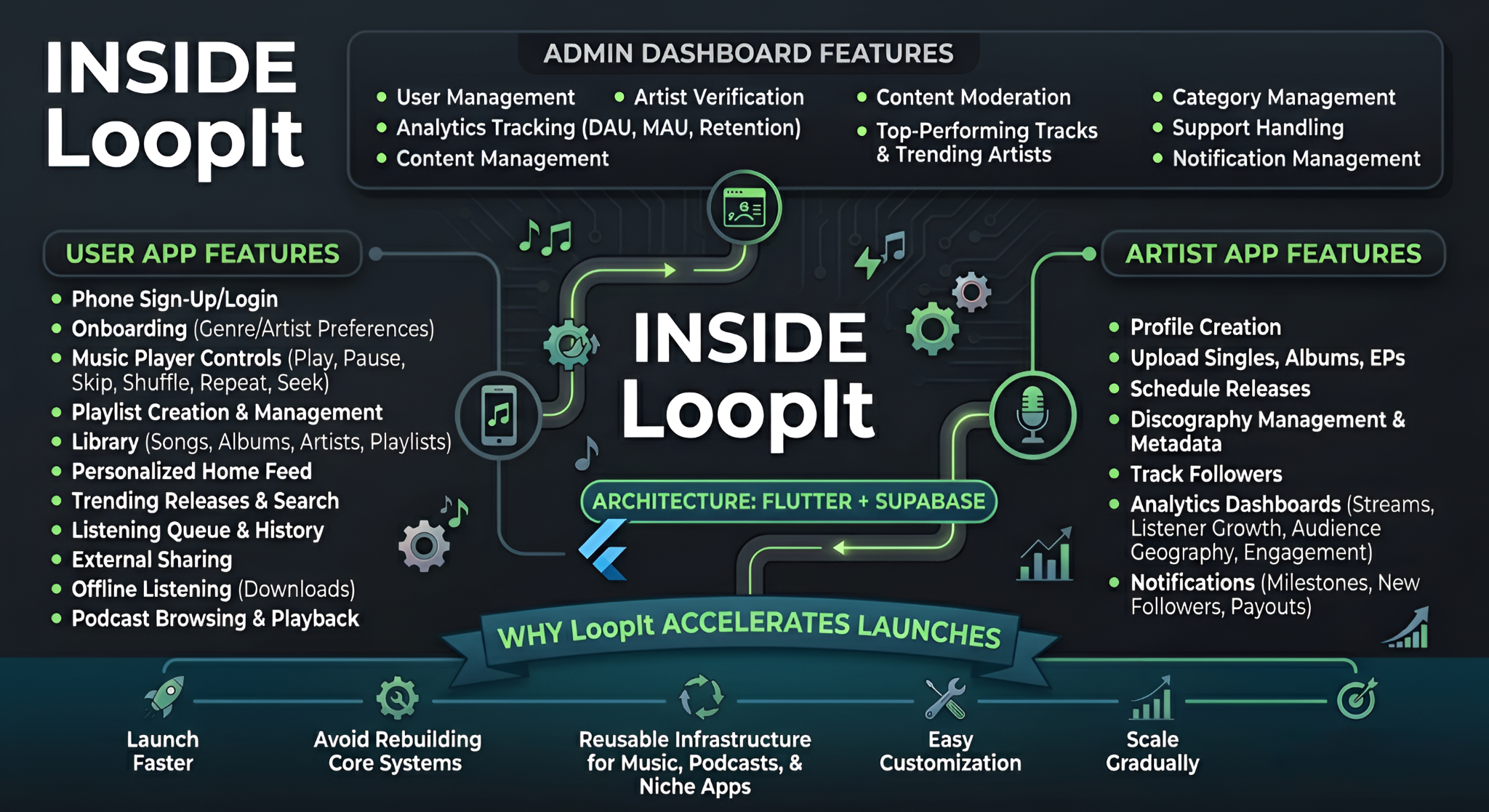
User App Features
LoopIt includes a complete user-side experience expected from modern apps like spotify.
Users can:
- sign up and log in with phone authentication,
- personalize onboarding through genre and artist preferences,
- stream music with play, pause, skip, shuffle, repeat, and seek controls,
- create and manage playlists,
- save songs, albums, artists, and playlists inside their library,
- browse personalized home feeds,
- discover trending releases,
- search songs, artists, albums, and podcasts,
- manage listening queues,
- access listening history,
- and share playlists externally.
Offline listening is also included inside the Spotify clone app, allowing users to download songs and continue playback without internet connectivity.
Podcast support is another important feature because many apps like spotify are no longer focused only on music. Users now expect podcast browsing and episode playback directly inside the same platform.
These expectations heavily influenced the way LoopIt was structured.
Artist App Features
One reason many streaming startups struggle is because they only focus on listeners and ignore creators.
LoopIt includes a dedicated artist-side experience inside the Spotify clone apk.
Artists can:
- create profiles,
- upload singles, albums, and EPs,
- schedule releases,
- manage discography,
- update metadata,
- track followers,
- and access analytics dashboards.
The analytics system inside this Spotify template helps artists monitor:
- streams,
- listener growth,
- audience geography,
- and engagement metrics.
This becomes important for creator-focused apps like spotify because artists increasingly expect transparency around audience performance and engagement.
Notifications for milestones, new followers, and payout updates are also included inside the platform architecture.
Admin Dashboard Features
A scalable Spotify clone app also needs moderation and platform management tools.
That’s why LoopIt includes a complete admin dashboard for:
- user management,
- artist verification,
- content moderation,
- analytics tracking,
- category management,
- support handling,
- and notification management.
Admins can monitor:
- DAU and MAU,
- retention metrics,
- top-performing tracks,
- trending artists,
- and overall platform growth.
These systems become extremely important once a Spotify clone apk starts scaling because moderation, analytics, and engagement management quickly become operational bottlenecks.
Why We Built LoopIt This Way
While working with startups at Arixlabs, we repeatedly noticed founders rebuilding identical streaming systems again and again. Playlist management, analytics, moderation flows, artist dashboards, recommendation systems — the same backend challenges kept appearing repeatedly.
That experience shaped the architecture behind LoopIt.
Instead of treating the product like a simple Spotify script, we designed it as scalable startup infrastructure that founders could customize around their own streaming business model.
That’s also why the platform uses Flutter + Supabase.
The combination allows startups to:
- launch faster,
- customize features easily,
- scale infrastructure gradually,
- and reduce long development cycles.
For many founders building apps like spotify, speed-to-market matters more than rebuilding backend systems manually for months.
And honestly, that’s the real reason LoopIt exists.
5. Why Most Founders Prefer Spotify Clone APK Solutions Over Building From Scratch
Building a scalable Spotify clone app from scratch sounds exciting in the beginning.
Then reality hits.
A modern Spotify clone apk needs much more than music playback. Once recommendation systems, analytics, playlist management, moderation tools, and streaming infrastructure enter the picture, development complexity increases fast.
That’s why many founders now prefer launch-ready Spotify template solutions instead of long custom development cycles.
Most apps like spotify require:
- scalable backend systems,
- streaming optimization,
- recommendation engines,
- analytics dashboards,
- artist management,
And all of these systems connect directly to Spotify system design challenges like caching, scalability, playback synchronization, and infrastructure planning.
At Arixlabs, we repeatedly noticed startups rebuilding the same systems again and again while trying to launch a Spotify clone app. Teams spent months working on backend infrastructure before even validating the product idea.
That’s one reason we built LoopIt differently.
Instead of treating it like a simple Spotify script, we designed LoopIt as reusable startup infrastructure that helps founders launch a scalable Spotify clone apk much faster.
With a production-ready Spotify template, startups can focus more on growth, branding, monetization, and user acquisition instead of rebuilding common streaming systems manually.
And honestly, in the current market for apps like spotify, launch speed matters more than ever.
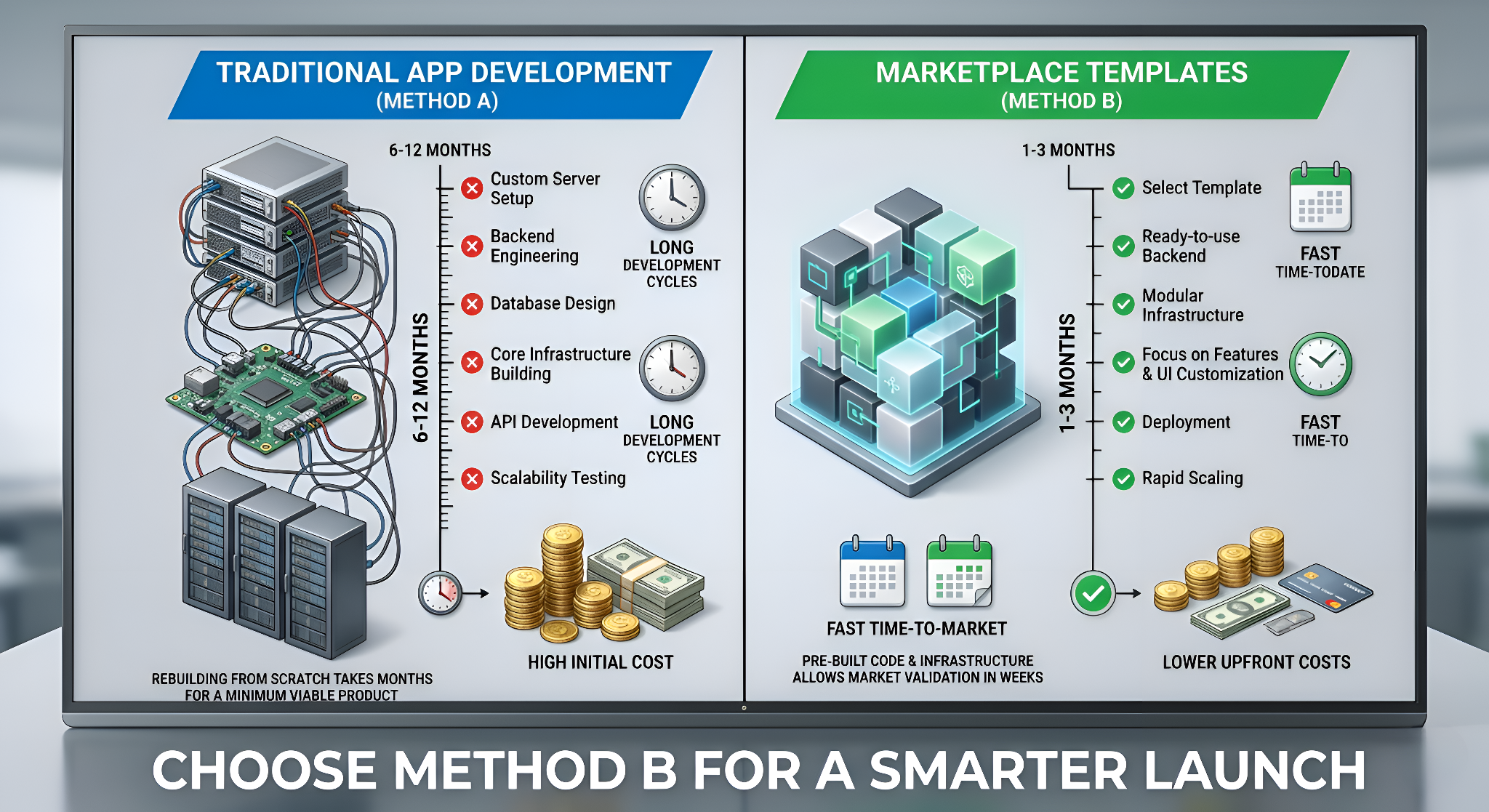
6. Why Marketplace Templates Are Replacing Traditional App Development
The startup ecosystem is moving much faster now.
Founders building a Spotify clone app no longer want to spend a year rebuilding infrastructure before launching an MVP. Most startups want validation quickly, which is one reason scalable Spotify template solutions are becoming increasingly popular.
A modern Spotify clone apk involves much more than frontend screens. Recommendation engines, analytics, subscriptions, moderation systems, playlist architecture, and backend scalability all connect directly to Spotify system design.
That’s where development becomes expensive.
Most apps like spotify require:
- scalable streaming infrastructure,
- cloud storage,
- playback optimization,
- recommendation systems,
- subscription management,
- and analytics tracking from the beginning.
Even a production-ready Spotify script can become difficult to scale once user activity starts increasing.
At Arixlabs, we noticed startups repeatedly rebuilding identical streaming systems while trying to launch a scalable Spotify clone app. Teams spent months solving backend problems before acquiring their first users.
That experience heavily influenced how we built LoopIt.
Instead of creating another basic Spotify template, we focused on reusable infrastructure that startups could customize around different streaming niches. Podcast platforms, regional streaming apps, creator ecosystems, fitness audio products, and devotional streaming apps can all evolve from the same scalable Spotify clone apk foundation.
This approach dramatically reduces development cycles.
Instead of rebuilding complex Spotify system design architecture repeatedly, startups can start with a scalable Spotify script foundation and focus more on branding, growth, monetization, and user acquisition.
And honestly, that’s one reason marketplace-driven products are becoming so valuable for founders building apps like spotify today.
A scalable Spotify clone app is no longer just about coding faster.
It’s about launching smarter.
7. Common Mistakes Startups Make While Building a Spotify Clone App
One of the biggest mistakes founders make while building a Spotify clone app is underestimating backend complexity.
Most teams focus heavily on UI while ignoring core Spotify system design challenges like:
- recommendation systems,
- streaming optimization,
- scalable storage,
- caching layers,
- and playback synchronization.
That usually creates problems later.
Another common issue is overbuilding too early. Startups spend months developing infrastructure before validating whether the Spotify clone apk actually has market demand. In many cases, launching faster with a scalable Spotify template is the smarter decision.
Weak personalization is another major problem for apps like spotify. Users now expect smart recommendations, adaptive playlists, and seamless streaming experiences. Without strong recommendation systems, even a scalable Spotify script struggles with retention.
At Arixlabs, we repeatedly noticed founders rebuilding identical streaming systems while developing LoopIt. That experience heavily influenced how we structured the platform architecture behind our Spotify clone app.
And honestly, that’s one reason launch-ready Spotify clone apk solutions are becoming increasingly valuable for startups building apps like spotify today.
8. Launch Your Streaming Platform Faster With LoopIt
Why spend months rebuilding streaming infrastructure when you can start with a production-ready Spotify clone app built for modern apps like spotify?
LoopIt helps startups launch a scalable Spotify clone apk faster with reusable architecture, artist tools, playlist systems, analytics, podcast support, and scalable backend infrastructure already in place. Instead of struggling with complex Spotify system design challenges or rebuilding another custom Spotify script, you can focus on growth, branding, and user acquisition from day one.
Explore LoopIt on the Arixlabs Marketplace and launch your streaming platform significantly faster.
FAQ
1. What is a Spotify clone app?
A Spotify clone app is a music streaming platform built with features similar to Spotify, including playlists, streaming, artist profiles, analytics, offline listening, and recommendation systems.
2. Why is Spotify system design considered difficult?
A scalable Spotify system design involves streaming optimization, caching systems, playback synchronization, recommendation engines, analytics tracking, and backend scalability working together continuously.
3. What is included in the LoopIt Spotify template?
LoopIt includes a user app, artist app, admin dashboard, playlist management, podcast support, analytics, moderation systems, and scalable backend architecture for launching a production-ready Spotify clone apk.
4. Why are startups choosing Spotify clone apk solutions?
Many startups prefer launch-ready Spotify clone apk solutions because they reduce development time, backend complexity, and infrastructure costs while helping founders launch faster.
5. What is a Spotify script?
A Spotify script usually refers to reusable source code or backend architecture used for building scalable streaming platforms and modern apps like spotify.


.png)

%201.jpg)


.png)

.jpg)

.png)
Ready to develop your own product? Get in touch today!
Get in Touch
