

How to Build the Best Telehealth Apps in Australia Using FlutterFlow
Build a secure, compliant, and scalable telehealth app for Australia faster than ever with FlutterFlow



1. Introduction
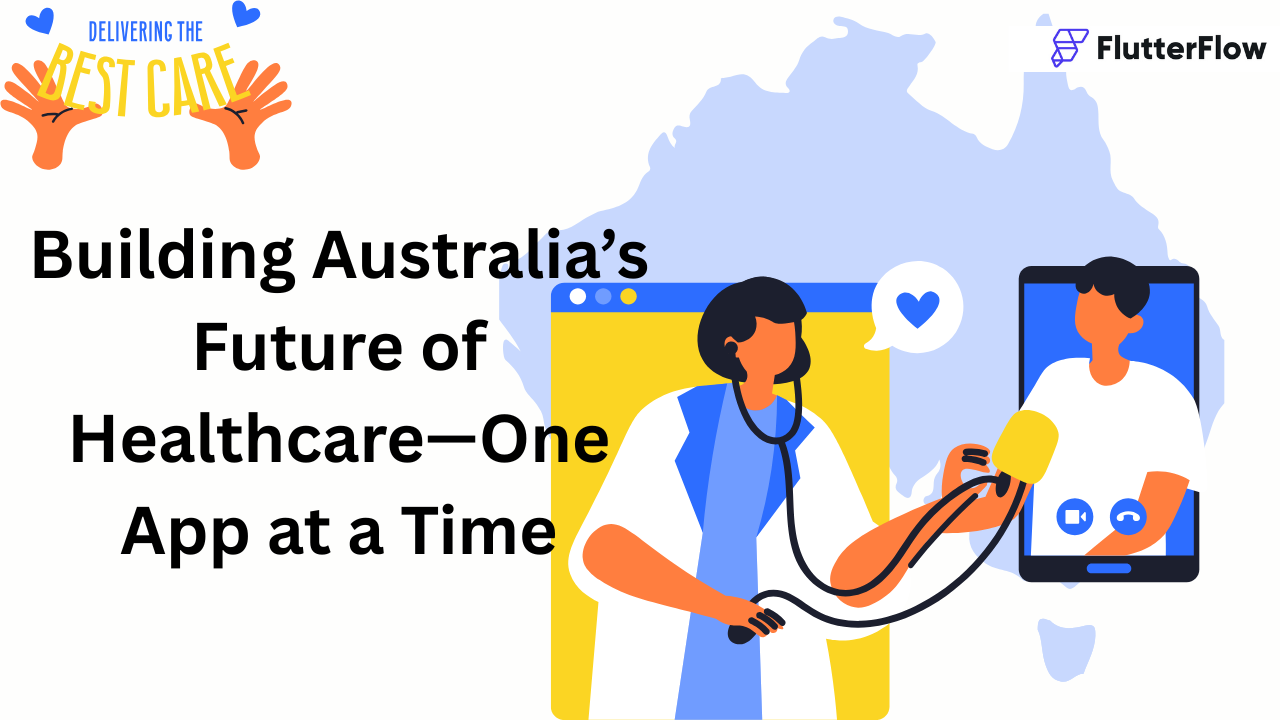
Telemedicine has transformed healthcare delivery in Australia by making medical services more accessible, convenient, and efficient. From virtual doctor consultations and e-prescriptions to remote patient monitoring, telehealth has become an essential service for clinics, hospitals, and healthcare startups across the country.
As demand for digital healthcare continues to grow, FlutterFlow is emerging as a powerful platform for building modern telehealth applications. With its visual development environment and robust integrations, FlutterFlow enables businesses to create secure, scalable, and feature-rich healthcare apps without the need for large engineering teams or lengthy development cycles.
Whether you're launching a telemedicine startup, digitizing your clinic's services, or building an enterprise healthcare solution, FlutterFlow provides the speed, flexibility, and scalability needed to deliver exceptional patient experiences and accelerate innovation in Australia's evolving healthtech landscape.
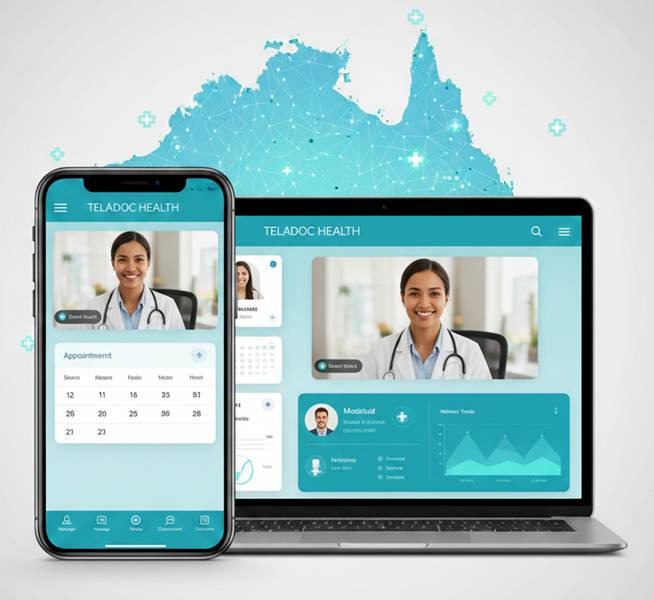
FlutterFlow's visual UI builder and workflow engine make it easy to create powerful healthcare applications with real-time data, backend integrations, and custom APIs. By connecting with services like Firebase, Supabase, and BuildShip, developers can build secure and scalable solutions such as appointment booking systems, video consultations, and digital patient records—all essential features of modern healthcare applications in Australia.
No-code development has opened new opportunities for founders, healthcare providers, and startups to build and launch products without the high costs and long timelines of traditional development. With FlutterFlow, teams can create functional MVPs in weeks, enabling faster testing, validation, and growth. At the same time, larger healthcare organizations can rapidly deploy updates while maintaining the security and reliability required in healthcare environments.
In this guide, we'll explore everything you need to know about building a telemedicine app with FlutterFlow in Australia—from compliance and regulations to architecture, integrations, and development costs. Whether you're launching a digital health startup or modernizing healthcare services, FlutterFlow provides the tools to build intelligent, scalable, and future-ready healthcare applications.
2. What Makes a Telehealth App Successful in Australia?
Developing a telemedicine application for use in Australia will require more than a basic video call — you’ll need to have confidence that your customers will have confidence in you, they'll find you convenient, you'll comply with regulatory requirements, and provide a seamless digital health care experience. With an increasingly competitive landscape and ever-increasing patient expectations, the best telemedicine applications are the ones that combine the ability for patients to access high-quality physicians when and how they want to, as well as robust security to protect their personal identifiable information (PII), and a seamless user experience supported by a reliable technology base. This is especially important for anyone aiming to offer the best telehealth app development in Australia and build a reliable FlutterFlow telehealth app in Australia.
2.1. Patient–Doctor Accessibility
A successful telemedicine application needs to make health care available to all people, whether they're working parents, elderly residents of rural communities or anyone else who has difficulty accessing in-person physician services. Australians expect to be able to access high-quality physicians immediately without having to spend hours waiting for appointments or going through difficult registration and onboarding processes. Fast and easy registration, easy-to-use interface, and easy access to physicians across many specialties are all key features to look for in a telemedicine application. Multi-device access, time zone-friendly scheduling, and clear role-based dashboard interfaces enable patients and physicians to communicate and work together whenever they choose — features expected from the best healthcare app in Australia.
2.2. Compliance With Australian Healthcare Standards
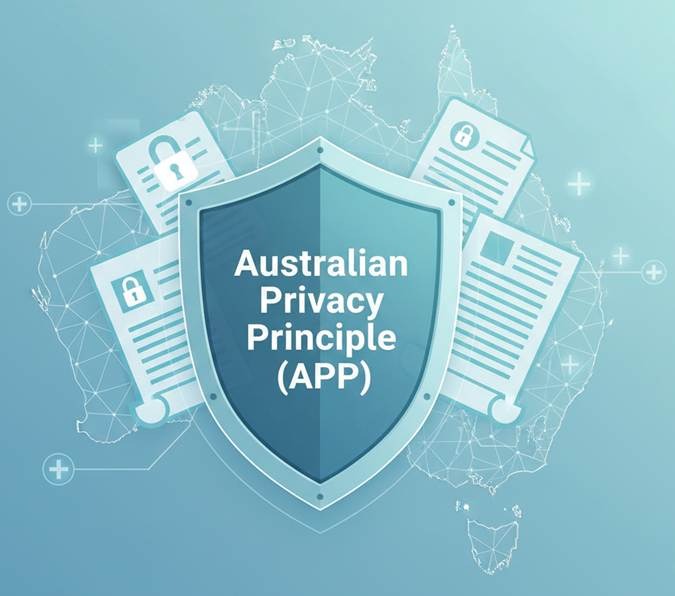
In the healthcare industry, some laws and regulations must be followed. Telemedicine applications operating in Australia must meet the Australian Office of the Information Commissioner's (OAIC) privacy regulations as well as the Australian Privacy Principles (APP) and other applicable medical data standards. In addition to meeting these standards, a telemedicine application must protect sensitive patient data and include provisions to prevent unauthorized access to patient data. A well-developed telemedicine application meets all of the compliance requirements from the start — protecting both the users and the company from potential liability issues. FlutterFlow simplifies compliance by allowing developers to integrate with compliant backends such as Firebase, Supabase, or BuildShip, which allow developers to set up data policies, permissions, and encryption, making it a strong foundation for FlutterFlow telehealth app in Australia projects.
2.3. Seamless Appointment Booking System in FlutterFlow
Another highly desired feature of any telemedicine application is an efficient scheduling process. FlutterFlow provides developers with several tools to create a scheduling system, including calendar widgets, real-time physician availability, automatic reminders, and approval workflow for physicians. An ideal telemedicine application should enable patients to schedule, cancel, or reschedule appointments with just a couple of clicks. This aligns perfectly with the need for a powerful appointment booking system FlutterFlow implementation. By enabling a seamless scheduling process, telemedicine applications not only increase patient satisfaction levels but also help clinics manage their time more efficiently and minimize "no shows."
2.4. Secure Messaging & Video Consultation
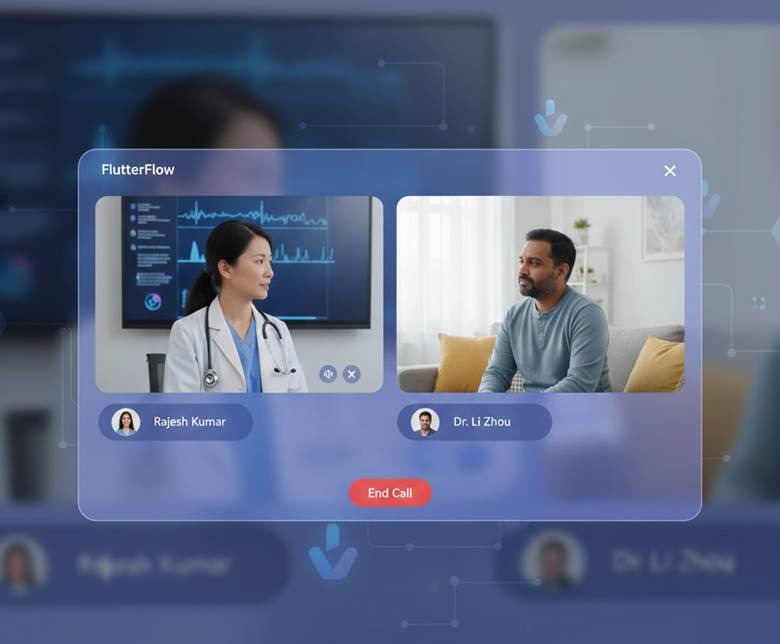
For telemedicine applications to be successful, communication between patients and clinicians needs to be immediate, reliable, and secure. Chat functionality, file sharing, uploading medical images, etc., allow patients to rapidly establish a connection with clinicians. Video consultations should be in HD quality and remain stable even over slower-than-optimal Internet connections — something that can be easily accomplished by utilizing WebRTC-powered integrations within FlutterFlow. Ensuring encryption, authentication, and session protection will maintain the confidentiality and trust of patients, key requirements for those developing the best telehealth app development in Australia.
2.5. Reliable Backend + Smooth UX
At the heart of a successful telemedicine application is a robust backend infrastructure. Because of the versatility of FlutterFlow, developers can integrate with Firebase, Supabase, Xano, or BuildShip for real-time operations, storing medical records, and automating tasks. In combination with a clean UI, accessible design, and fast load times, a seamless user experience can be created. A solid backend will help limit downtime, while a polished UI will enhance trust and credibility — two important aspects of healthcare applications, and essential to any best healthcare app in Australia initiative.
3. Why Choose FlutterFlow for Telehealth Apps in Australia?
FlutterFlow has rapidly emerged as one of the top choices among many healthcare-based founders, clinics, and large enterprises for developing high-quality, compliant, and scalable telehealth solutions; it will allow for an accelerated development cycle, streamlined workflow processes, and integration with powerful backends and AI-based technologies, both of which will be vital in Australia’s expanding digital health marketplace. This makes it especially attractive for those seeking the best telehealth app development in Australia and building a FlutterFlow telehealth app in Australia. The reasons why FlutterFlow offers so much value include:

3.1 Speed of Development
The typical application development process can take months — sometimes over a year — before a developer has a first usable version of their telehealth app. FlutterFlow greatly reduces the timeframe for developing a telehealth app. With FlutterFlow’s visual builder, drag-and-drop UI components and pre-built templates, your team can go from concept to a Minimum Viable Product (MVP) in a matter of weeks. In addition to allowing rapid validation of business ideas and/or the need to quickly implement new service offerings, the rapid development offered by FlutterFlow is invaluable for Australian healthcare start-ups that wish to develop and deploy a telehealth solution quickly — and for clinic administrators who may be seeking to quickly digitize services, especially when building the best healthcare app in Australia.
3.2 Visual Workflows for Complex Logic
Telehealth apps involve numerous different processes, such as appointment scheduling, patient registration, approval from doctors prior to consulting, e-prescribing, etc. By using a visual workflow builder, you can create these same types of processes in your telehealth app without having to write thousands of lines of code. Not only does this save time when creating and maintaining your telehealth app, but it also allows you to reduce the likelihood of bugs within your telehealth app and provide a more robust and reliable user experience — regardless of whether your users are patients or healthcare professionals. This is particularly useful when building workflow features like an appointment booking system FlutterFlow, which many Australian telehealth providers now rely on.
3.3 AI Integration Made Simple
Artificial intelligence (AI) is increasingly important to the telehealth space, particularly for providing features such as automatic preliminary assessments, AI-powered chatbots, document scanning, and smart triage systems. FlutterFlow enables you to seamlessly integrate AI technologies into your telehealth app, including OpenAI, Google Cloud, and other third-party AI APIs. If healthcare providers desire AI-driven features such as intelligent appointment routing or AI-driven symptom assessment, FlutterFlow provides a straightforward way to add those features into your telehealth app without requiring extensive software development work — further supporting modern requirements for the best telehealth app development in Australia.
3.4 Multi-Platform Deployment (iOS, Android, Web)
To achieve success with a telehealth app, it must be accessible to users no matter where they are accessing it. FlutterFlow enables simultaneous deployment of your telehealth solution to multiple platforms, including iOS, Android and Web. This eliminates the need for costly, time-consuming development and testing to ensure consistency and responsiveness across multiple platforms. Regardless of whether patients are viewing the telehealth app via a mobile device or clinicians are using a desktop computer to view dashboards, the user experience will remain consistent and responsive — a core requirement for a high-performing FlutterFlow telehealth app in Australia.
3.5 Strong Backend Connectivity
Telehealth applications require secure storage of patient information, real-time updates of schedules, and automation of many clinical workflows. FlutterFlow provides a smooth connection to a variety of popular backends, including Firebase, Supabase, BuildShip, Xano, and custom APIs. These connections ensure that patient information flows securely between the frontend and backend of your telehealth app, that schedule updates occur immediately, and that video consultations operate efficiently and reliably — all foundational elements of the best healthcare app in Australia.
3.6 Ideal for Building the Best Healthcare App in Australia
FlutterFlow offers a scalable architecture that complies with Australian regulations and allows for rapid app creation while offering the same level of security and performance as an enterprise-level platform; making it ideal for creating your best Australian healthcare application or your telehealth app, especially if you're looking for the best telehealth app development in Australia or building a FlutterFlow telehealth app in Australia with features like an appointment booking system FlutterFlow to support the best healthcare app in Australia.
4. Key Features to Include in an Australian Telehealth App
The development of a telehealth app for the Australian marketplace will require precision, compliance with regulatory requirements, and a user-centric design that will satisfy users' expectations concerning booking an appointment, having a smooth video consultation experience, being able to have their health information handled securely, and being able to quickly access their own medical records. FlutterFlow is a tool that makes it much easier to develop these required features with respect to a robust back-end, visual workflow capabilities, and integration flexibility. Below are some of the most important features each of the best telehealth apps in Australia should include.
4.1 Appointment Booking System
Telemedicine applications require an easy-to-use, automatic and flexible way of managing appointments; FlutterFlow provides many tools to support this application area and is widely used in the best telehealth app development in Australia.
• Using FlutterFlow Calendar Widgets
Using the built-in calendar widget from FlutterFlow, patients can navigate through the days, see which doctors are available at that time, see what times are available for each doctor, etc. The calendar widget can be fully customized and connected to the back-end to display the most up-to-date information, making it suitable for an appointment booking system FlutterFlow setup.
• Slot Selection Workflow
Workflows will allow you to develop dynamic slot selections for your patients. Available slots are determined by the doctor's schedule (e.g., working hours), or if there are other scheduled sessions. Workflows will prevent users from scheduling multiple appointments simultaneously as well as eliminate errors in scheduling sessions — a key feature in the best healthcare app in Australia.
• Automated Confirmations
Automatic confirmation messages may be sent immediately after an appointment has been scheduled, confirmed or rescheduled. In addition to sending automatic confirmation messages via in-app alerts, workflows will also allow you to send confirmation messages via email or connect to SMS gateways to notify patients of their upcoming appointments, supporting seamless FlutterFlow telehealth app in Australia workflows.
• Notifications and Reminders
Reminding patients of their scheduled appointments and improving patient compliance can both be accomplished using timely reminders. Push notifications such as "Tomorrow's Appointment", "Your Doctor Has Been Delayed", or "Your Session Is About to Start" can be triggered automatically through backend triggers, helping strengthen any appointment booking system FlutterFlow setup.
4.2 Secure Video Consultation
Video calls are the core of telehealth and must be secure, stable, and easy to use.
• FlutterFlow + WebRTC
WebRTC enables encrypted, real-time communication. Through custom API or third-party video platforms, FlutterFlow can support high-quality video consultations without compromising performance or privacy.
• Patient–Doctor Session Flows
A smooth consultation process involves clear steps—joining the call, verifying identity, ongoing communication, ending the session, and recording notes. FlutterFlow workflows allow each stage to be structured and automated for both roles.
• Connection Quality & Mobile-Friendly UI
Responsive UI layouts ensure that calls remain stable and easy to navigate across mobile devices. FlutterFlow makes it simple to add controls like mute, screen switch, end call, and chat during consultation.
4.3 Patient Records & History
Reliable record-keeping builds trust and ensures clinical consistency.
• Storage Options (Firebase, Supabase, BuildShip)
These systems offer scalable, secure databases with real-time sync, making it easy to store consultation notes, medical reports, past visits, symptoms, and prescriptions.
• Data Privacy & Encryption
All patient data must meet Australian Privacy Principles (APP) requirements. FlutterFlow supports role-based access, secure API calls, and rules-based data visibility to ensure confidentiality and compliance.
4.4 ePrescriptions & Treatment Notes
A telehealth app must support instant digital prescribing.
• Automating With API Workflows
API workflows allow doctors to create prescriptions with structured forms. The system can then generate PDFs, store them in the patient record, or send them to designated pharmacies automatically.
4.5 In-App Chat & File Sharing
Communication beyond video calls is essential for continuous care.
• Real-Time Messaging
Using Firebase or Supabase, FlutterFlow supports live chat messaging with instant sync, making conversations fluid and reliable.
• Secure Sharing of Medical Images/Reports
Patients can upload X-rays, lab reports, or images securely. Files are stored in encrypted databases, ensuring safe transmission and storage of sensitive medical information.
5. Compliance Requirements in Australia
To build a telehealth app in the Australian market, you will be required to comply with the national laws regarding privacy, security, and data management — all of which are fundamental when developing the best telehealth app development in Australia. Telehealth applications are required to handle clinical information (medical reports, consultation history, prescription records, etc.), which is considered highly confidential therefore, all healthcare applications must comply with the regulations and frameworks established by the Government of Australia, especially when creating a FlutterFlow telehealth app in Australia. To develop an application that complies with the Australian Government’s regulatory framework while providing users with an intuitive experience can be achieved using FlutterFlow and secure backend solutions such as Firebase, Supabase, or BuildShip, ensuring your platform aligns with the standards of the best healthcare app in Australia. The compliance regulations and requirements, as well as the technical architecture required to provide adequate high-level data protection of health data, are discussed below, which is essential for any appointment booking system FlutterFlow implementation.
5.1 Australian Healthcare Privacy Guidelines
OAIC Requirements
The Office of the Australian Information Commissioner (OAIC) regulates all healthcare data handling under the Privacy Act 1988. Telehealth apps must comply with rules covering the collection, storage, disclosure, and use of personal medical information. OAIC mandates clear consent policies, strict verification of patient identity, and transparent processes for data access or correction.
APP (Australian Privacy Principles)
The Australian Privacy Principles (APPs) define how organisations must handle personal and sensitive health information. Key principles include:
- APP 1: Transparent management of personal health data
- APP 3: Lawful and minimal data collection
- APP 6: Restricted data use and disclosure
- APP 11: Strong protection against data breaches
- APP 13: Allowing patients to correct or update their health records
A compliant telehealth app must incorporate workflows for authorization, data minimisation, audit logs, and breach notifications.
Storing Medical Data Securely
Australian guidelines require that clinical data must be:
- Stored in secure, access-controlled environments
- Encrypted at rest and in transit
- Hosted on infrastructure meeting Australian data residency requirements (when applicable)
Using Firebase or Supabase with proper security rules ensures compliance, while BuildShip helps automate secure backend logic.
5.2 Security Architecture in FlutterFlow
Roles & Permissions
Healthcare apps require complex access structures. FlutterFlow’s built-in role-based access control (RBAC) allows separation of patient, doctor, admin, and support roles. This ensures that each user only accesses data relevant to their role—critical for APP compliance.
Backend Rules
Whether using Firebase’s Firestore Rules or Supabase Row-Level Security (RLS), backend access must be tightly governed. Rules must enforce:
- Verified authentication
- Patient-only access to personal health data
- Doctor access only during active treatment relationships
- Admin access restricted to non-clinical data
These rules prevent unauthorized individuals from viewing or modifying patient records.
Data Encryption
All sensitive data must be encrypted:
- In transit, via HTTPS and SSL
- At rest, via backend-level encryption (handled automatically by Firebase or Supabase)
For files such as prescriptions, medical scans, and reports, encrypting storage buckets ensures additional protection.
Protecting Sensitive Health Information
A secure FlutterFlow telehealth app includes:
- Multi-factor authentication
- Secure session handling
- Audit logs for every data access event
- Automated threat detection and alerting
- API rate limiting to prevent abuse
By combining FlutterFlow’s no-code UI capabilities with strict backend governance, you can build a telehealth application that aligns fully with Australia’s privacy and security laws while offering a seamless experience for patients and clinicians.
6. Step-by-Step Guide to Building a Telehealth App in FlutterFlow
6.1 Define User Roles
Patients
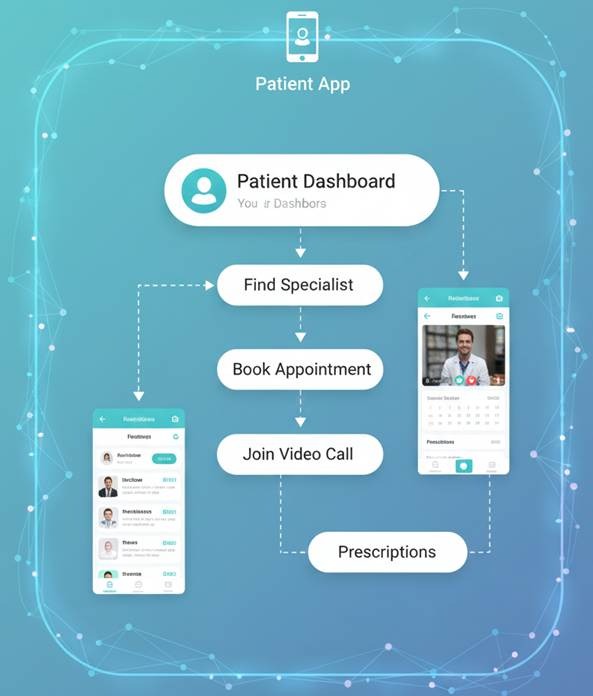
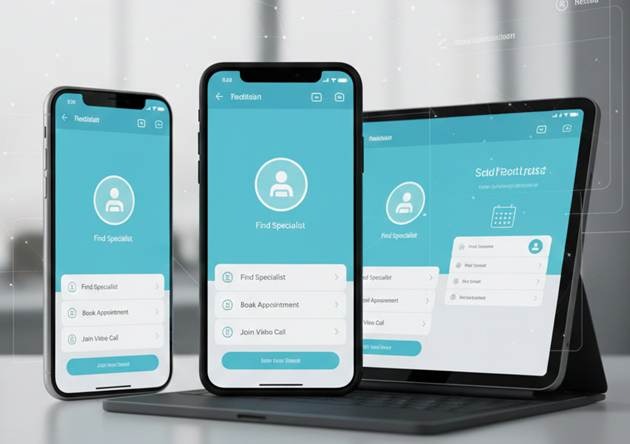
Patients will have simple access to booking of appointments, joining of video consultations, messaging with doctors, and viewing of medical history — features expected in the best telehealth app development in Australia. The users' dashboard should provide an easy way of locating of specialist, ordering and managing prescriptions, and receiving reminders. The FlutterFlow allows to create the screens based on roles to make the interaction of patients smooth, secure, and convenient, which is essential for any FlutterFlow telehealth app in Australia and an efficient appointment booking system FlutterFlow.
Doctors
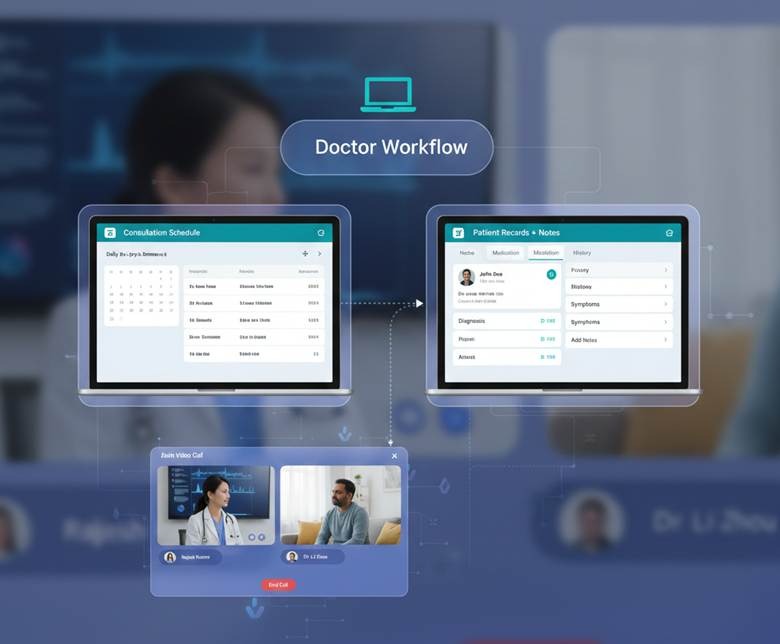
Doctors require a professional interface to manage scheduling, to initiate video sessions, to update treatment notes, and to manage patient records safely, as expected from the best healthcare app in Australia. The FlutterFlow provides the possibility to limit by permissions actions of the doctor, and therefore the doctor has access to only that information which is required. In addition to this, real-time updates are used to prevent doctors from missing the bookings, alerts, urgent messages, etc., and to improve the general level of clinical effectiveness.
Admin
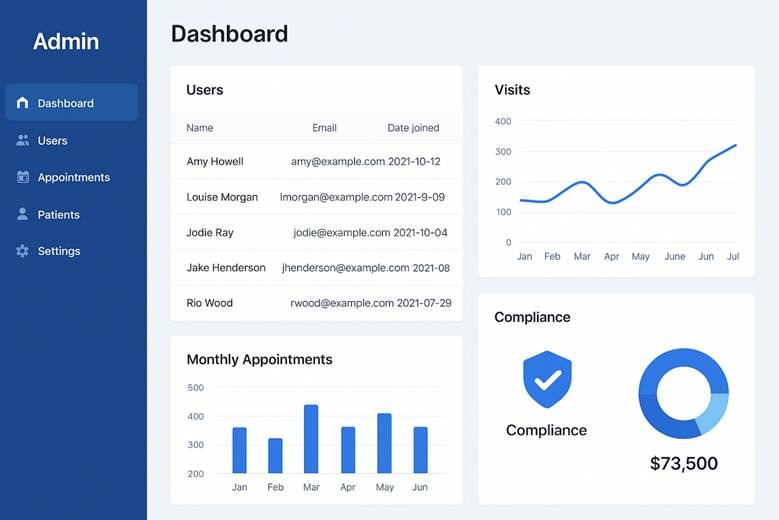
Administrators are responsible for monitoring of performance of the platform, management of users, configuring compliance settings, and backend analysis — key functions in any FlutterFlow telehealth app in Australia. The administrators define the policy of security, guarantee continuous operation of the service, and ensure good operation of the clinic or the startup of telemedicine. With the help of integration of backend services and rules of FlutterFlow, the administrators can easily manage the data, workflows, and state of the system, supporting a robust appointment booking system FlutterFlow setup.
6.2 Design UI/UX
Healthcare Color Palette
To make a healthcare application environment comfortable for patients to utilize, choose a palette of calm and trustworthy colors such as blue, white, and teal. The chosen color tone will promote concentration, assist in reducing anxiety associated with the patient's medical interactions, while also promoting trust between the patient and doctor. FlutterFlow offers the ability to rapidly theme the application, allowing each screen to be visually consistent with the brand and the overall identity of the healthcare organization, which is essential when creating the best healthcare app in Australia or a FlutterFlow telehealth app in Australia.
Accessibility Design
Adhere to WCAG accessibility guidelines to allow senior citizens and patients with disabilities to access the application easily. Use large font size options, create high contrast button options, include voice-friendly layouts, and easy to follow menu navigation within your application. FlutterFlow provides a toolset to assist you in creating responsive designs that are accessible on all devices — a core requirement for the best telehealth app development in Australia.
Navigation Flow
Create a well-defined navigation flow that is designed to quickly direct the user from appointment to chat to video call with the least number of taps required by the user. The clean nature of the menus and the bottom navigation provides ease of use. The visual builder provided by FlutterFlow allows you to clearly identify how the patient will interact with the doctor throughout the application, which will assist in making it easy for the user to navigate through the application, especially in apps built with an appointment booking system FlutterFlow or modern FlutterFlow telehealth app in Australia.
6.3 Build Core Features
Appointments
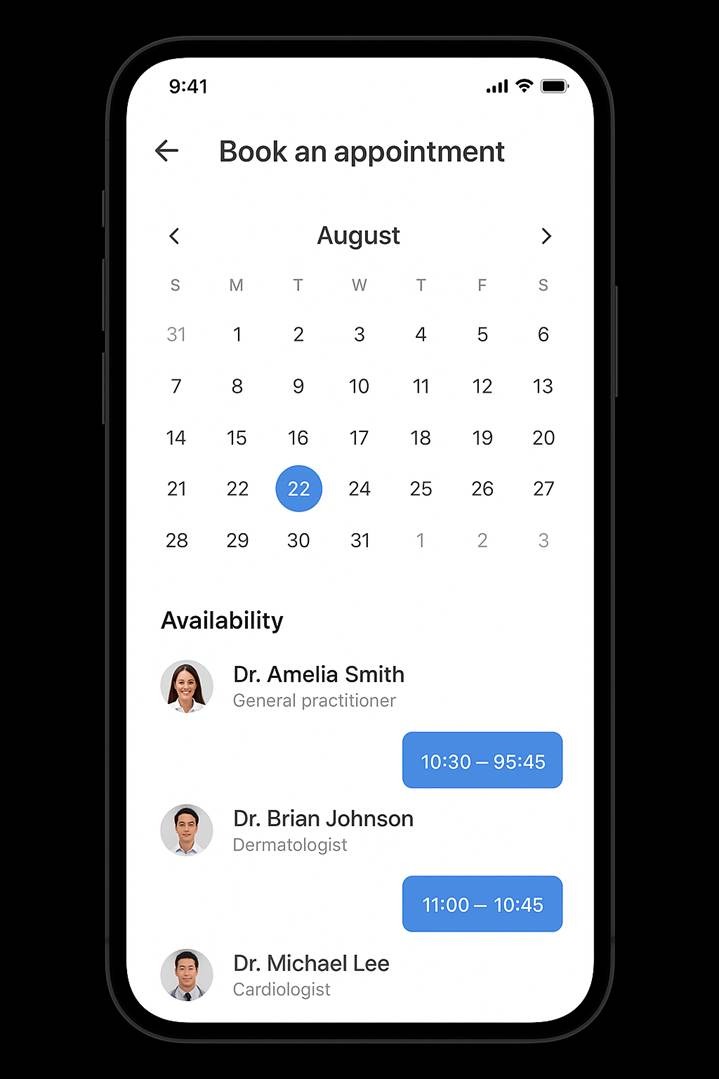
Set up appointments through the use of calendars as well as doctor availability, and confirm each appointment in order to streamline this process. Also, allow the user to cancel or reschedule an appointment with one click. Workflows created by FlutterFlow will enable you to establish a trigger for sending reminders for appointments, as well as slots and doctor notifications — an essential feature in any appointment booking system FlutterFlow is used for the best telehealth app development in Australia.
Video Calls
Build secure video consultations through the use of WebRTC or third-party API's. Develop a simple call flow so that patients can enter a call directly from their patient dashboard. Pre-call screens, connection check, and customization of the UI are all supported by FlutterFlow to create a clean experience, which is crucial for a high-quality FlutterFlow telehealth app in Australia.
Payments
Add payment options such as card payments, subscription plans, and per session payment using either Stripe or Medicare compliant API's. Allow users to pay securely within the app. Automatic transaction processing, receipt generation, and ledger update capabilities are all provided by the payment gateway connectors offered by FlutterFlow — helping your platform align with the expectations of the best healthcare app in Australia.
Medical Records
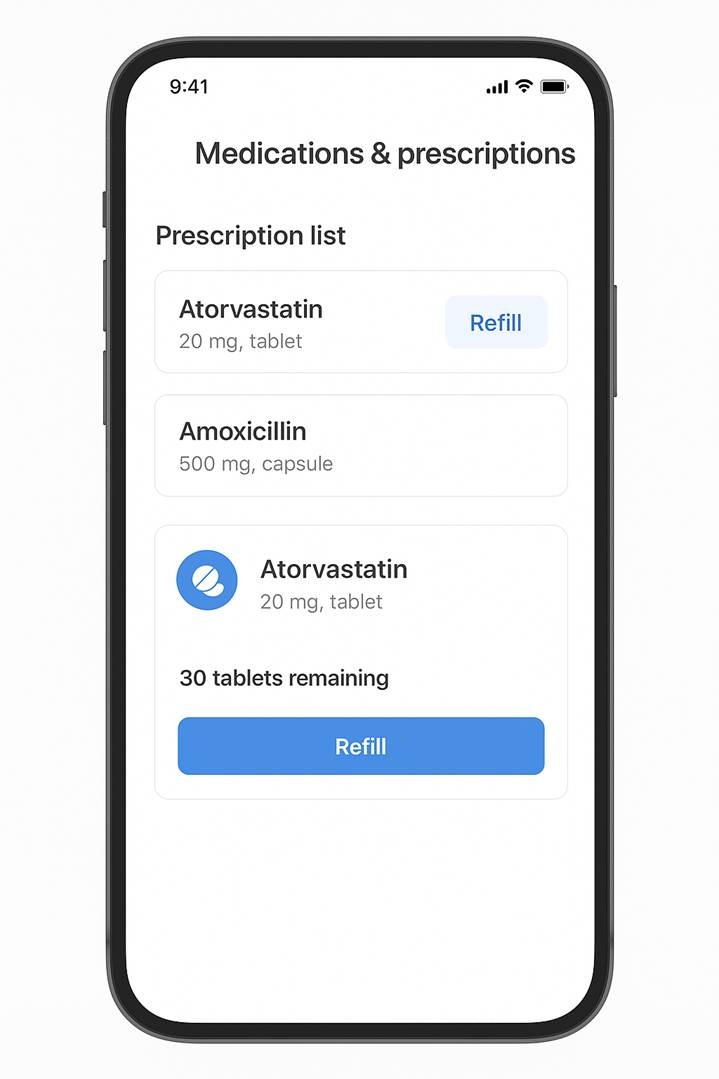
Allow patients and doctors to access previous visits, prescriptions, lab results, and notes. Use secure storage like Firebase or Supabase to maintain confidentiality. FlutterFlow makes it easy to create dynamic record pages and permission-based visibility.
6.4 Connect Backend
Firebase / Supabase / BuildShip
Determine which back-end will meet your HIPAA-like compliance requirements, scalability, and performance expectations. Firebase has advantages in real-time data handling; Supabase provides SQL database flexibility; and BuildShip provides an automation of workflow. The combination of the three can be done with ease by using FlutterFlow, especially when developing the best telehealth app development in Australia or creating a FlutterFlow telehealth app in Australia tailored for modern healthcare needs.
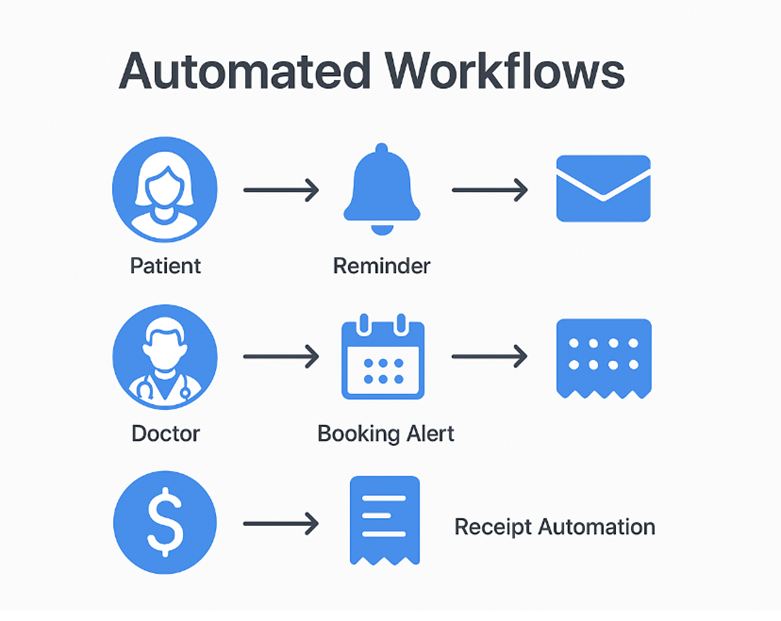
Automated Workflows
Use workflow automation to send patient reminder emails, confirmation of payments to patients, upload prescriptions to a database, or send notifications to doctors. Using BuildShip and FlutterFlow’s workflow automation reduces the need to write large amounts of code to automate business processes, providing rapid and reliable operation — a valuable capability for any appointment booking system, FlutterFlow, or best healthcare app in Australia.
6.5 Testing & QA
Device Testing
To check that your app's layout is visually consistent across different mobile devices, test it out on various screen sizes of iPhones, Android phones, and tablets, especially when building the best telehealth app development in Australia or a FlutterFlow telehealth app in Australia. Validate each button, form, and navigation path to make sure everything works properly when a user interacts with your app, ensuring smooth performance for any appointment booking system FlutterFlow feature.
Load Testing
Check to see how well your app can handle a large number of people trying to book an appointment or join a video call at the same time during peak hours; this will help you identify any potential performance issues and allow you to optimize your backend queries or workflows as needed — a crucial aspect for the best healthcare app in Australia.
Accessibility Testing
Verify that your app allows for support of screen reader applications, larger text adjustment, and proper color contrast; FlutterFlow's responsive settings make it easier to modify accessibility features to include patients in all age groups and disabilities, ensuring compliance for high-quality Australian telehealth apps.
6.6 Deployment & App Store Launch
iOS & Android
Prepare separate builds for the App Store and Google Play. Configure necessary certificates, splash screens, and versioning. FlutterFlow simplifies the export and deployment pipeline for both platforms.
Telehealth App Store Compliance
Medical apps must follow strict guidelines—privacy policies, clinical disclaimers, secure data handling, and approved API usage. Ensure all documentation is ready before publishing. Once live, track analytics and feedback to improve performance and user experience.
7. How Much Does It Cost to Build a Telehealth App in Australia?
Building a telehealth app in Australia involves several factors—feature complexity, backend infrastructure, compliance needs, design quality, and long-term scaling. While traditional development can become expensive and time-consuming, FlutterFlow significantly reduces the overall cost and delivery time without compromising on performance or security. Here’s a detailed breakdown to help you understand the investment required.
7.1 Cost Ranges: MVP → Enterprise
MVP Telehealth App Development Cost (Australia)
An MVP usually includes core features like appointment booking, video consultation, in-app chat, authentication, and basic patient records.
Estimated Cost Range: AUD 18,000, 35,000
This is ideal for startups testing market demand or launching early versions for feedback. With FlutterFlow, even complex UI and workflows can be delivered faster, keeping the MVP budget-friendly.
Mid-Level Telehealth App Cost
For apps that include ePrescriptions, advanced scheduling, speciality doctor management, secure messaging, analytics, and multi-role dashboards, the cost increases.
Estimated Cost Range: AUD 40,000, 75,000
This level suits private clinics, emerging telehealth brands, and founders preparing for investor demos.
Enterprise-Grade Telehealth Platform Cost
A full-scale solution includes electronic health records, multi-clinic management, compliance automation, AI integrations, health monitoring devices, payment gateways, and advanced reporting.
Estimated Cost Range: AUD 80,000, 200,000+
These platforms focus heavily on security, scalability, performance, and long-term architecture.
7.2 How FlutterFlow Significantly Lowers Costs
FlutterFlow is transforming the Australian telehealth development landscape by reducing both development time and budget.
The platform’s drag-and-drop UI, reusable components, built-in workflows, and real-time integrations allow teams to build faster without compromising on quality.
Compared to traditional coding, FlutterFlow can reduce development costs by 30–50%, especially for MVPs and mid-sized products.
Other cost-saving factors include:
- Fewer engineering hours
- Faster UI development
- Easier backend integration
- Quick bug fixing and iteration
- Lower ongoing development expenses
Startups and clinics save significantly during both initial builds and future updates.
7.3 Maintenance & Scalability Costs
Maintenance is essential for long-term reliability. Updates include bug fixes, new features, security patches, and backend performance improvements.
Typical maintenance cost for a telehealth app in Australia:
AUD 1,500, 4,000 per month, depending on feature complexity and user volume.
FlutterFlow reduces maintenance burdens through easy UI edits, visual workflows, and simplified role-based access. Scaling to more users, more clinics, or additional features becomes affordable and quicker because the core system is already structured visually and cleanly.
8. Future of Telehealth Apps in Australia
Telehealth in Australia is moving quickly and will be significantly influenced by technological development, increased patient requirements, and positive government policies. The next generation of telehealth applications is expected to change the way in which healthcare services are provided to Australian citizens. Below is an overview of some of the emerging trends that are likely to shape the use of FlutterFlow telehealth applications in Australia.
8.1 AI-Powered Diagnosis
AI has started to make a significant impact on how fast and accurately physicians can complete preliminary assessments. Using AI algorithms, medical professionals can now assess patient symptoms, review medical images, and analyze patient histories to help identify potential diagnoses and treatment options. By integrating AI into FlutterFlow-based telehealth applications, this functionality may allow for automated triaging, recommendation of possible treatment options, and reduction of clinical workloads — ultimately allowing for quicker access to care for all Australians.
8.2 Remote Patient Monitoring
Remote monitoring technologies enable physicians to remotely monitor patients' vital signs, chronic conditions, and post-operative recoveries. When telehealth applications connect to remote monitoring devices, they can receive real-time data about a patient's heart rate, blood pressure, glucose levels, and oxygen saturation levels. As well as improving patient results, remote monitoring enables patients to avoid non-essential clinic appointments, thus providing greater access to healthcare services nationwide — a key component of telemedicine app development in Australia.
8.3 Wearable Device Integration
With wearable technology becoming increasingly widespread and including items like smartwatches and fitness monitors, modern telehealth applications can interface with these types of devices and collect continuous health data from them, which can then be entered into a patient's record. Physicians can use the collected real-time data via the application to proactively intervene and create customized care plans for their patients, while enhancing patient engagement and long-term digital health adoption. This trend supports the growth of FlutterFlow healthcare apps in Australia.
8.4 Government Support & Medicare Growth
The Australian government is providing strong support for telemedicine through government-funded programs and Medicare rebate structures, as well as policy initiatives. During the COVID-19 pandemic, there was a surge in the acceptance of virtual care services, and the Australian government continues to invest in telemedicine to ensure continued sustainability for both patients and healthcare service providers. Developers of telehealth applications can utilize these programs to enhance accessibility, support rural telehealth expansion, and build apps aligned with national health objectives — especially for teams creating the best telehealth apps in Australia.
8.5 The Role of FlutterFlow in the Future
FlutterFlow's no-code platform provides a unique opportunity for developers to deliver continuous telehealth innovation. The flexible nature of FlutterFlow enables developers to easily incorporate AI tools, remote monitoring APIs, and wearable device data feeds into their telemedicine platforms. With cross-platform deployment capabilities and secure backend integration (Firebase, Supabase, BuildShip), FlutterFlow ensures scalability, security, and speed — making it ideal for building any FlutterFlow telemedicine app in Australia.
The future of telehealth in Australia appears promising with the convergence of AI-driven diagnostic capabilities, remote monitoring, wearable technology integration, and strong government support. By utilizing FlutterFlow to develop next-generation telehealth applications, developers and healthcare organizations can stay ahead of emerging trends and continue delivering innovative, compliant, and scalable healthcare applications to Australian patients.
9. Conclusion
Telemedicine is transforming healthcare delivery across Australia, making medical services more accessible, efficient, and patient-centric. As demand for digital healthcare continues to grow, telehealth applications are becoming essential for startups, clinics, and hospitals seeking to deliver better patient experiences and improve operational efficiency.
FlutterFlow has emerged as a powerful platform for telehealth app development by combining rapid development, flexibility, and enterprise-grade security. Its visual workflows enable teams to build features such as appointment booking, video consultations, e-prescriptions, and automated patient reminders with minimal coding effort. By significantly reducing development time and costs, FlutterFlow enables healthcare innovators to bring products to market faster without compromising on quality.
With seamless integrations for Firebase, Supabase, and BuildShip, FlutterFlow also supports secure data management, role-based access control, and scalable architectures that align with Australian privacy and compliance requirements. This makes it easier to build healthcare applications that are secure, compliant, and ready for future growth.
At FlutterFlowDevs, we specialize in transforming healthcare ideas into scalable, production-ready telemedicine applications. From UI/UX design and backend development to deployment and ongoing support, our team helps healthcare innovators build secure and user-friendly digital solutions.
The future of healthcare in Australia is digital. By leveraging FlutterFlow and no-code development, startups and healthcare providers can accelerate innovation, reduce costs, and deliver better care experiences. With the right technology and development partner, your telemedicine app can help shape the future of Australian healthcare.


View more blogs
.png)

.jpg)


.png)
.png)


.png)
.png)

Ready to develop your own product? Get in touch today!
Get in Touch
